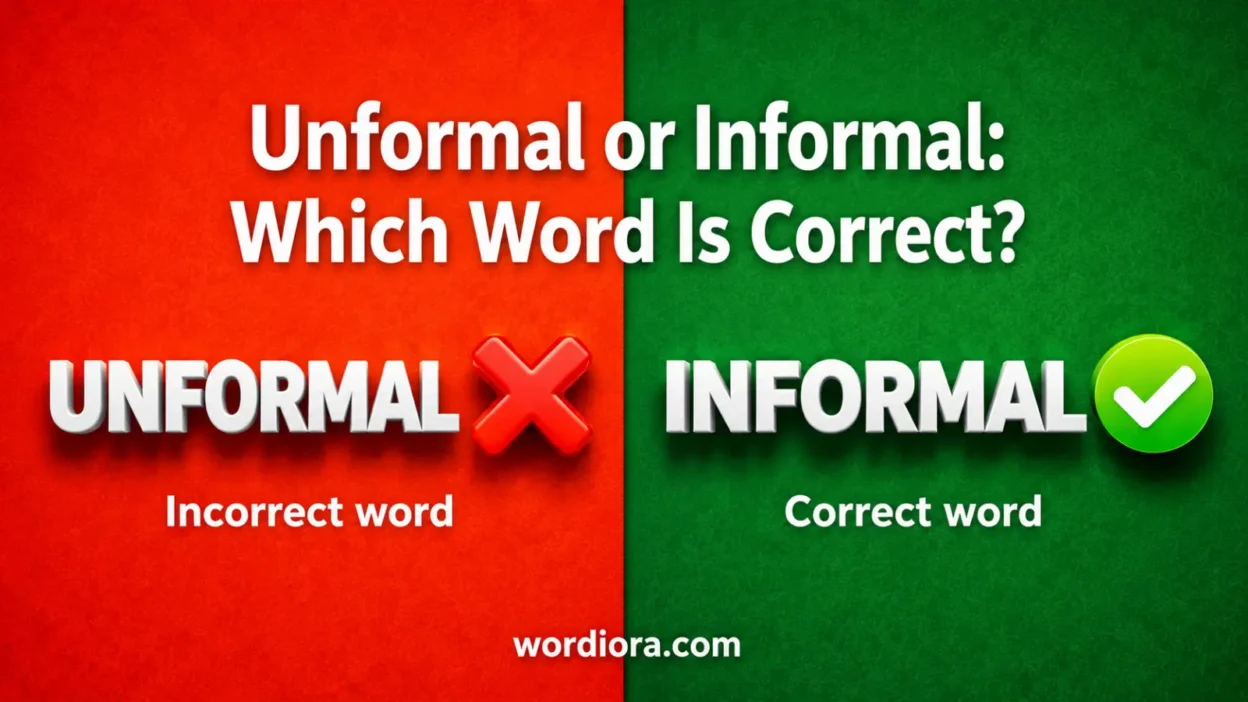
If you are choosing between unformal or informal, use informal in almost every normal sentence. It is the standard word in modern English. It describes something casual, relaxed, unofficial, or not meant for a formal setting.
Unformal may look logical because un- often means “not.” However, modern US English does not usually use unformal. Most readers will see it as odd, outdated, or a mistaken form of informal. For clear writing, choose informal.
Quick Answer
Informal is the correct and natural choice in modern US English. Use it for casual speech, relaxed clothing, unofficial meetings, friendly events, and everyday writing. Unformal can mean “not formal,” but it is rare and nonstandard. In school, work, publishing, and everyday communication, informal is the safer word.
Why People Confuse Them
People confuse unformal and informal because both seem to mean “not formal.” The prefix un- often creates opposites, as in unhappy, unclear, and unfair. So, unformal may sound possible.
The problem is that English does not always choose the form that looks most logical. The standard opposite of formal is informal, not unformal. Native speakers learn this pattern through use, not by applying one prefix rule to every word.
Another reason for the confusion is that informal has more than one common use. It can describe a relaxed event, casual clothing, friendly behavior, everyday language, or an unofficial process. Because the word covers many contexts, some writers try to create unformal for one of those meanings. That usually sounds unnatural.
Key Differences At A Glance
| Context | Best Choice | Why |
|---|---|---|
| Casual clothing | informal | Standard phrase in modern English |
| Relaxed meeting | informal | Natural and widely accepted |
| Everyday speech | informal | Correct term for casual language |
| Unofficial agreement | informal | Common in business and legal contexts |
| School or work writing | informal | Clear and standard |
| Creative or rare usage | unformal | Possible, but not recommended for normal use |
Meaning and Usage Difference
Informal means not formal, not stiff, not ceremonial, or not official. It can describe tone, dress, writing, conversation, meetings, events, and arrangements.
Examples:
The company held an informal meeting after lunch.
Please wear informal clothes to the picnic.
That phrase sounds too informal for a legal letter.
We made an informal agreement before signing the contract.
Unformal also points toward the idea of “not formal,” but it is not the usual modern word. In most cases, it does not add a useful meaning that informal does not already cover. Because of that, readers may pause and wonder whether it is a typo.
Use informal when you mean casual, relaxed, unofficial, conversational, or everyday. Avoid unformal unless you are discussing the word itself or quoting a source that uses it.
A helpful way to remember the difference is simple: informal is the standard word; unformal is the unusual one.
Tone, Context, and Formality
Informal fits both everyday and professional contexts when the meaning is correct. The word itself is not sloppy. You can use it in a polished report, grammar lesson, school paper, business email, or workplace policy.
For example, informal meeting sounds professional. It does not mean the meeting is careless. It means the meeting is less official, less structured, or less ceremonial.
Informal language also has a clear meaning. It refers to relaxed, conversational language. It may include contractions, simpler wording, personal tone, or everyday expressions. That does not make the phrase incorrect. It simply describes a style.
Unformal, however, can make writing look less polished. Even when readers understand the meaning, the word may distract them. In formal writing, that distraction matters. In casual writing, it can still look like an error.
So, the tone difference is not that informal is casual and unformal is formal. The real difference is that informal is standard, while unformal is rare.
Which One Should You Use?
Use informal in nearly every case.
Choose informal for events:
We had an informal dinner with neighbors.
The team planned an informal celebration.
Choose informal for clothing:
The invitation says informal dress.
Sneakers are fine for this informal event.
Choose informal for communication:
Her email was friendly and informal.
This phrase is common in informal speech.
Choose informal for unofficial actions:
They reached an informal agreement.
The manager took an informal poll.
Avoid unformal in normal writing. It may be understood, but it will not sound natural to most US readers. If you want clear, confident English, informal is the better choice.
When One Choice Sounds Wrong
Unformal sounds wrong when it appears in common phrases where English expects informal.
Wrong: We had an unformal meeting.
Correct: We had an informal meeting.
Wrong: The email was too unformal.
Correct: The email was too informal.
Wrong: Wear unformal clothes to the party.
Correct: Wear informal clothes to the party.
Wrong: This word is used in unformal speech.
Correct: This word is used in informal speech.
In each example, unformal is easy to understand, but it does not sound standard. Readers may still know what you mean, but good word choice is not only about being understood. It is also about sounding natural.
Informal can sound wrong only when the meaning does not fit. For example, do not use informal when you mean illegal, rude, messy, or poorly planned. An informal meeting is not automatically a bad meeting. It is simply less official or less structured.
Common Mistakes (and Quick Fixes)
One common mistake is using unformal because it looks like the direct opposite of formal. The fix is easy: use informal.
Mistake: This is an unformal way to speak.
Fix: This is an informal way to speak.
Another mistake is thinking informal means incorrect. It does not. Informal language can be correct, clear, and useful. It just fits relaxed settings better than official ones.
Mistake: Informal English is always bad English.
Fix: Informal English is fine when the setting is casual.
A third mistake is using informal where a stronger word is needed. If something breaks rules, use a more exact word such as improper, unofficial, irregular, or unauthorized, depending on the meaning.
Weak: The payment process was informal.
Clearer: The payment process was unauthorized.
Weak: His behavior was informal.
Clearer: His behavior was inappropriate.
Everyday Examples
Here are natural examples with informal:
The interview started with an informal chat.
Our office has an informal dress code on Fridays.
She writes in a warm, informal style.
The group made an informal plan for the weekend.
This phrase works better in informal conversation.
He has an informal way of explaining hard topics.
The dinner was informal, so no one wore a suit.
We discussed the issue in an informal meeting.
That greeting sounds too informal for a cover letter.
They reached an informal understanding.
Here are examples that show why unformal is not the best choice:
Awkward: The class had an unformal discussion.
Better: The class had an informal discussion.
Awkward: Her tone was friendly but unformal.
Better: Her tone was friendly but informal.
Awkward: The event is unformal, so dress comfortably.
Better: The event is informal, so dress comfortably.
Dictionary-Style Word Details
Verb
Unformal: Not commonly used as a verb in standard US English. Do not write “to unformal” in normal writing.
Informal: Not commonly used as a verb. Use make informal, keep informal, or speak informally instead.
Examples:
Better: Let’s keep the meeting informal.
Better: She spoke informally with the guests.
Noun
Unformal: Not commonly used as a noun in standard US English.
Informal: Mainly an adjective, not a noun. The related noun is informality. In some contexts, people may use informals to refer to informal clothes or events, but that is not the main use for learners and everyday writers.
Examples:
The informality of the meeting helped everyone relax.
The event’s informality made it feel welcoming.
Synonyms
Unformal: Closest plain alternative: informal. Because unformal is rare, it is better to replace it rather than search for a separate synonym list.
Informal: Closest plain alternatives include casual, relaxed, unofficial, conversational, everyday, and friendly.
Choose the synonym that fits the sentence:
Use casual for clothing or tone.
Use unofficial for rules, meetings, or agreements.
Use conversational for writing or speech.
Use relaxed for atmosphere or behavior.
A clear opposite is formal. Other possible opposites depend on context, such as official, ceremonial, dressy, or strict.
Example Sentences
Unformal:
The word unformal is rare, so many editors would change it to informal.
A learner might write unformal, but informal is the standard choice.
Informal:
We had an informal meeting after the presentation.
This message sounds too informal for a job application.
The restaurant has an informal atmosphere.
Text messages often use informal language.
They made an informal agreement before the paperwork was ready.
Word History
Unformal: The word is formed from un- plus formal, so its meaning is easy to guess. Still, English did not make it the normal modern opposite of formal.
Informal: The word uses in-, a common negative prefix from Latin-based word formation. In modern English, informal became the standard adjective for “not formal.”
The history is useful, but it should not confuse the choice. Modern usage matters most: write informal.
Phrases Containing
Unformal: There are no common standard phrases with unformal that most US writers need.
Informal: Common phrases include:
informal meeting
informal language
informal writing
informal speech
informal dress
informal event
informal agreement
informal conversation
informal tone
informal setting
These phrases are natural and widely understood.
FAQs
Is unformal a real word?
Unformal can appear as a word meaning “not formal,” but it is rare and not the normal choice in modern US English. Most writers should use informal instead.
Is informal the correct word?
Yes. Informal is the correct standard word when you mean casual, relaxed, unofficial, conversational, or not formal.
Can I say unformal meeting?
It is better to say informal meeting. Unformal meeting may be understood, but it sounds unnatural and may look like a mistake.
What is the difference between unformal and informal?
The main difference is usage. Informal is standard and natural. Unformal is rare and usually not recommended in everyday, school, or professional writing.
Is informal a negative word?
No. Informal is not automatically negative. An informal meeting, tone, or event can be friendly, clear, and appropriate. It only means the style is not formal.
What should I write in a business email?
Write informal if you need the word. For example, “We had an informal conversation about the project.” Do not use unformal in business writing.
What is the opposite of formal?
The standard opposite is usually informal. Depending on the sentence, other opposites may include casual, unofficial, or relaxed.
Is informal the same as casual?
Often, yes, but not always. Casual is a close alternative for clothing, tone, and events. Informal can also mean unofficial or less structured.
Conclusion
For unformal or informal, the best answer is clear: use informal. It is the standard word in modern US English and works for casual clothing, relaxed events, friendly tone, everyday speech, and unofficial arrangements.
Unformal may look logical, but it is rare and usually sounds unnatural. In most sentences, it will distract readers instead of helping them. When you want polished, natural, and correct English, write informal.