


Too Bad or To Bad: Which Is Correct in American English Today?
Too bad is the correct expression when you mean that something is unfortunate, disappointing, regrettable, or worse than acceptable. For…
Anyway or Anyways: Which One Is Correct in American English?
Should you write anyway or anyways? In most situations, choose anyway. Anyway is the standard, widely accepted form for everyday,…

Take Affect or Take Effect: Which One Is Correct in English?
When something begins working, becomes active, or officially starts to apply, the correct expression is take effect. For example, a new policy…
Laid or Layed: Correct Meaning, Grammar, and Usage Guide
Choosing between laid or layed becomes easy once you know one essential fact: these are not two equally acceptable forms. Laid is the standard…

Hi or Hello: Meaning, Differences, and When to Use Each
Both hi and hello are correct ways to greet someone. The difference is mainly about tone, formality, and context, not grammatical correctness.…
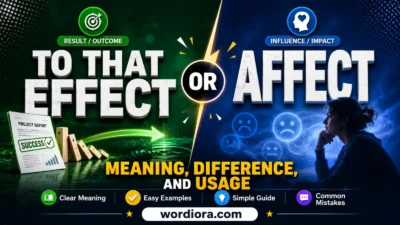
to that effect or affect: Meaning, Difference, and Usage
Last Updated: July 27, 2026 The correct expression is to that effect. It means something has roughly the same meaning as an earlier statement,…
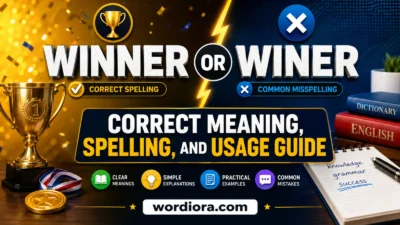
Winner or Winer: Correct Meaning, Spelling, and Usage Guide
Last Updated: July 27, 2026 When you mean a person, team, or thing that wins, the correct word is winner with two n’s. A contest has a winner,…

posible or possible: Correct Spelling and Usage Explained
Choosing between posible and possible is simple once you know that they are not two standard English alternatives. Only one belongs in…
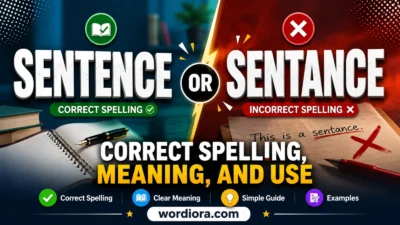
Sentence or Sentance: Correct Spelling, Meaning, and Use
A single vowel causes the confusion in sentence or sentance. The two forms may look equally possible, especially because the unstressed middle…

Homey or Homie: Meanings, Differences, and Correct Usage
Homey and homie sound the same and differ by only one letter, but they usually serve different purposes. Homey most often describes a place,…