



Standardized or Standardised: The Correct US Spelling Explained
You’ve typed the word, paused, and stared at it. Does it end in a “z” or an “s”? You’re not imagining…

kurt or curt: Meaning, Difference, and Correct Usage Guide
The difference between kurt or curt depends on what you are trying to say. Use curt when describing speech, writing, or behavior that is very…

Memento or Momento: Which Spelling Is Correct in English?
Choosing between memento or momento can be confusing because both spellings appear online. They may also sound very similar in everyday…

Quit or Quite: Difference, Meaning, and Correct Usage
Quit and quite are both correct English words, but they are not interchangeable. Use quit when you mean to stop, leave, or give up something.…

Prey or Pray: Key Differences, Meanings, and Correct Usage
Prey and pray are both correct words, but they are not interchangeable. Use prey when talking about something hunted, targeted, exploited, or…

Each or Every: Key Differences, Rules, and Clear Examples
Choosing between each or every can be confusing because both words can refer to all members of a group. In many sentences, either word is…

Censored or Sensored: Meaning, Difference, and Correct Use
Censored and sensored look almost identical, but they belong in very different contexts. Use censored when speech, writing, images, video, or…

Colon or Semicolon: Which Punctuation Mark Should You Use?
Choosing between a colon or semicolon depends on the relationship you want to show. A colon (:) points forward. It introduces something that…

Nevermind or Never Mind: Which Is Correct in US English?
The choice between nevermind or never mind looks like a simple spacing issue, but the two forms are not fully interchangeable. In standard US…
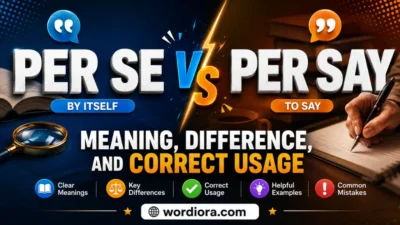
Per Se or Per Say: Meaning, Difference, and Correct Usage
When choosing between per se or per say, the correct expression is per se. It means “in itself,” “by itself,” or “intrinsically.” By contrast,…