
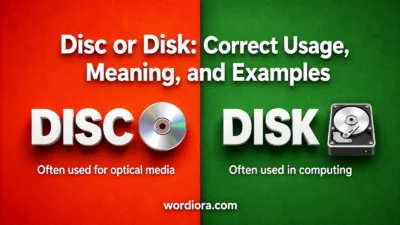
Disc or Disk: Correct Usage, Meaning, and Examples
Disc or disk can be confusing because both spellings are real words, both are pronounced the same way, and both can describe something flat…
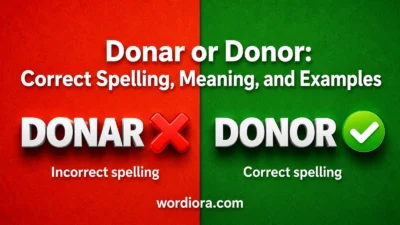
Donar or Donor: Correct Spelling, Meaning, and Examples
If you are choosing between donar and donor, the correct word in standard US English is donor. A donor is a person, group, or organization…
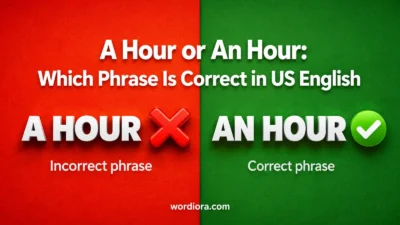
A Hour or An Hour: Which Phrase Is Correct in US English
The correct phrase is an hour, not a hour. Even though hour starts with the letter h, that h is silent. The word begins with a vowel sound, so…
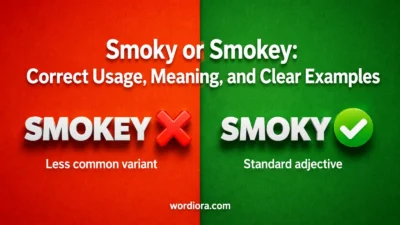
Smoky or Smokey: Correct Usage, Meaning, and Clear Examples
Last Updated: July 27, 2026 Smoky or smokey is confusing because both spellings appear in real English. You may see smoky flavor on a menu,…
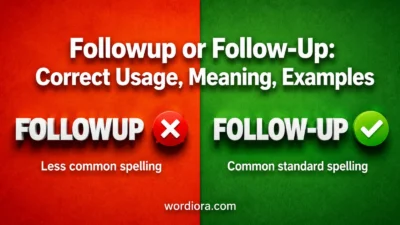
Followup or Follow-Up: Correct Usage, Meaning, Examples
Is it followup or follow-up? In standard English, follow-up is the correct spelling when the term functions as a noun or adjective, while…
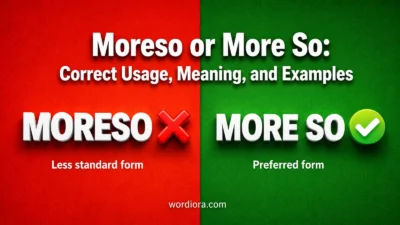
Moreso or More So: Correct Usage, Meaning, and Examples
The correct standard choice is more so, written as two words. Moreso appears in informal writing, especially online, but many careful readers…
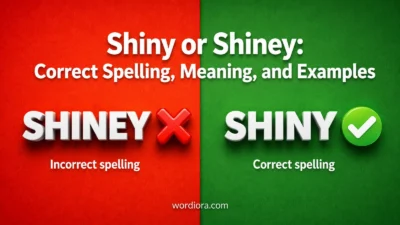
Shiny or Shiney: Correct Spelling, Meaning, and Examples
If you are choosing between shiny or shiney, the correct word is shiny. It describes something bright, smooth, glossy, or reflective. You…
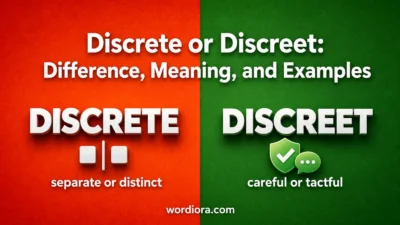
Discrete or Discreet: Difference, Meaning, and Examples
Discrete and discreet are both correct English words, but they do not mean the same thing. Use discrete when something is separate, distinct,…
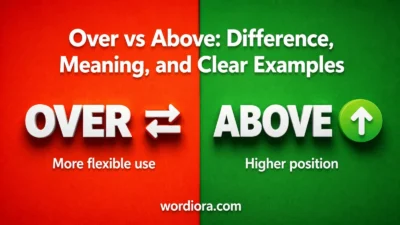
Over vs Above: Difference, Meaning, and Clear Examples
Over and above can both describe something higher than something else, so they are easy to mix up. Still, they do not always create the same…
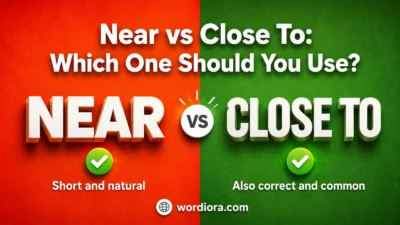
Near vs Close To: Which One Should You Use?
Near vs close to can confuse writers because both can describe short distance. In many everyday sentences, both sound natural. You can say,…