Word Choice5 Min Read Daniel HarrisonMay 9, 2026 Simple Sentence vs Compound Sentence: Key Differences A simple sentence and a compound sentence are both complete sentences, but they work differently. A simple sentence contains one independent…
Word Choice5 Min Read Daniel HarrisonMay 9, 2026 Get Used To vs Used To: What’s the Real Difference? “Get used to” and “used to” are closely related phrases, but they are not interchangeable. One describes a change or adjustment happening over…
Word Choice5 Min Read Daniel HarrisonMay 9, 2026 Be Used To vs Used To: What’s the Real Difference? “Be used to” and “used to” look similar, but they mean very different things in English. Many writers confuse them because both phrases…
Word Choice8 Min Read Daniel HarrisonMay 8, 2026 Would Rather Vs Would Prefer: Meaning And Usage Guide Would rather vs would prefer is a choice between two ways to express preference. Both can mean that you like one option more than another, but…
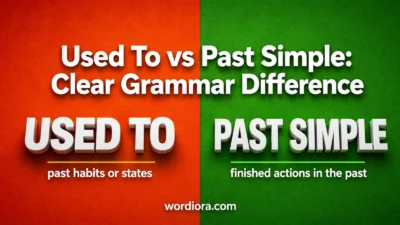
Word Choice5 Min Read Daniel HarrisonMay 8, 2026 Used To vs Use To: What’s the Difference and When to Use Each “Used to” and “use to” sound almost identical in spoken English, which is exactly why so many people mix them up in writing. The confusion…
Word Choice5 Min Read Daniel HarrisonMay 8, 2026 Used To vs Would: What’s the Difference in English? “Used to” and “would” can both describe past habits, which is why many writers and English learners confuse them. In some sentences, either…
Word Choice4 Min Read Daniel HarrisonMay 8, 2026 Had Better vs Should: What’s the Real Difference? “Had better” and “should” both give advice, but they do not sound the same. In American English, one often feels stronger, more urgent, or…
Word Choice6 Min Read Daniel HarrisonMay 7, 2026 Can Have vs Could Have: Meaning and Usage Difference Can have and could have are not interchangeable in most sentences. The main difference is time and certainty. Use can have when something is…
Word Choice5 Min Read Daniel HarrisonMay 7, 2026 Don’t Have To vs Mustn’t: Meaning and Correct English Usage Don’t have to and mustn’t do not mean the same thing. Use don’t have to when something is not necessary. The person may do it, but there is no…
Word Choice5 Min Read Daniel HarrisonMay 7, 2026 Should Have vs Must Have: Meaning and Correct Usage Should have vs must have is a common grammar choice because both phrases talk about the past, but they do not mean the same thing. Use should…