



Customer or Client: Correct Usage, Meaning, and Examples
Should you say customer or client? Both words can refer to someone who pays for goods or services, but they do not always feel the same in…
Wacky or Whacky: Correct Spelling and Clear Usage Guide
Should you write wacky or whacky? The better choice in modern American English is wacky. It is the spelling most readers expect, especially in…
Nosey or Nosy: Correct Spelling and Simple Usage Examples
Should you write nosey or nosy? In modern US English, nosy is the better default spelling. It is the form most readers expect in schoolwork,…
Wracking or Racking: Correct Usage and Clear Meaning Guide
Wracking or racking can be confusing because both words sound exactly the same and sometimes appear in similar expressions. You may see…
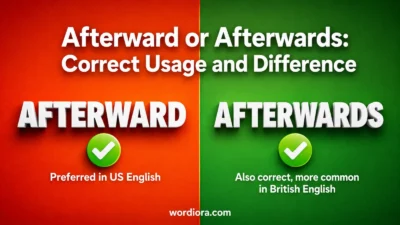
Afterward or Afterwards: Correct Usage and Difference
Many writers pause over afterward or afterwards because both words look correct, sound natural, and mean almost the same thing. The difference…
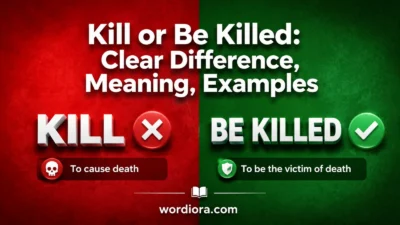
Kill or Be Killed: Clear Difference, Meaning, Examples
Kill or be killed compares two grammar roles. Kill shows action. The subject does something. Be killed shows result. The subject receives the…
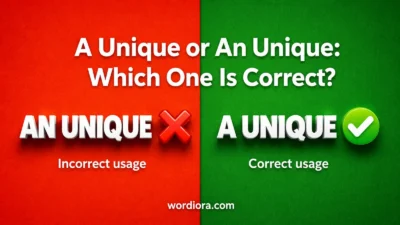
A Unique or An Unique: Which One Is Correct?
Use a unique, not an unique, in modern US English. The spelling may confuse people because unique begins with the vowel letter u, but English…
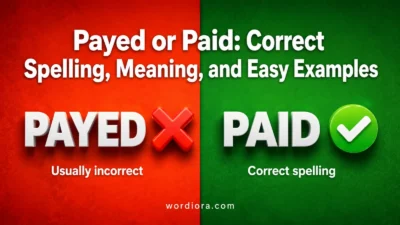
Payed or Paid: Correct Spelling, Meaning, and Easy Examples
Many writers pause at payed or paid because both spellings look possible. Since many English verbs form the past tense with -ed, payed can…
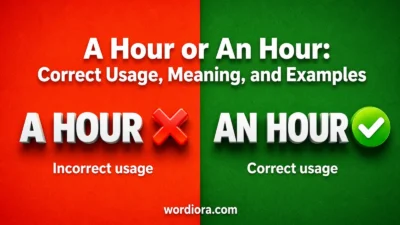
A Hour or An Hour: Correct Usage, Meaning, and Examples
The correct choice is an hour, not a hour. This small phrase confuses many learners because hour begins with the letter h, and h is usually a…
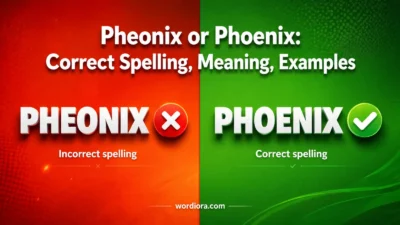
Pheonix or Phoenix: Correct Spelling, Meaning, Examples
If you are choosing between pheonix or phoenix, the correct spelling is phoenix. The word pheonix is a common spelling mistake. It may look…