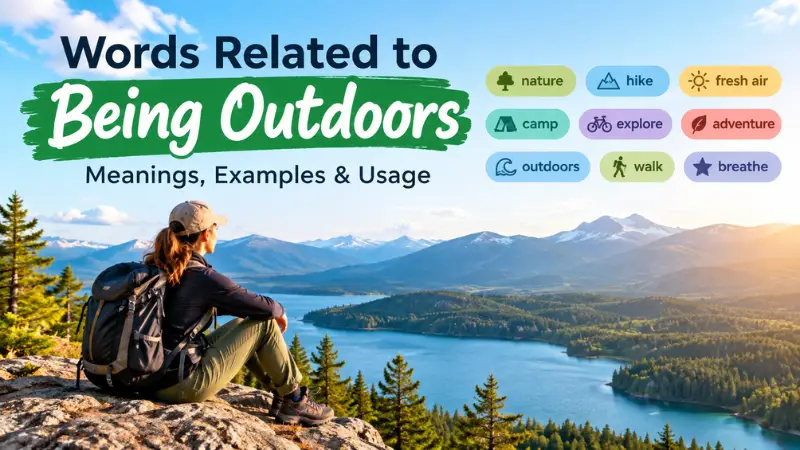
If you are looking for words related to being outdoors, you have plenty of options beyond simply saying “outside.” Words such as outdoor, outdoors, nature, wilderness, hiking, camping, exploring, fresh air, scenic, adventurous, and recreational can describe outdoor places, activities, experiences, and feelings.
Whether you are writing an article, improving your vocabulary, describing a trip, or looking for the right word for an outdoor experience, this guide covers useful outdoor vocabulary words with clear meanings and examples.
What Does “Being Outdoors” Mean?
Being outdoors means spending time outside rather than inside a building, home, office, or other enclosed space. It can include relaxing in a backyard, walking through a park, hiking in the mountains, camping in a forest, visiting a beach, or exploring nature.
The best word depends on what you want to describe.
For example:
- Outdoors — being outside in general
- Nature — the natural world
- Wilderness — a largely undeveloped natural area
- Recreation — activities done for enjoyment or relaxation
- Adventure — an exciting or unusual experience
- Exploration — traveling around an area to discover it
- Hiking — walking for recreation, usually on trails or natural terrain
- Camping — staying outdoors, often in a tent or camper
Words Related to Being Outdoors
Here are some of the most useful words associated with spending time outside.
| Word | Meaning | Example |
|---|---|---|
| Outdoors | Outside or in an open-air environment | We spent the afternoon outdoors. |
| Outdoor | Taking place outside | We planned an outdoor picnic. |
| Nature | The natural world | She enjoys spending time in nature. |
| Wilderness | A natural area with little human development | They explored the wilderness for several days. |
| Landscape | The visible features of a natural area | The mountain landscape was spectacular. |
| Scenery | Natural features viewed as a whole | The scenery along the trail was beautiful. |
| Fresh air | Clean or outdoor air, especially compared with indoor air | Let’s go outside and get some fresh air. |
| Open-air | Existing or happening outside | The town hosts an open-air market. |
| Natural | Relating to nature | The park has a natural setting. |
| Scenic | Having attractive or impressive views | We took a scenic route through the countryside. |
| Rustic | Simple and characteristic of rural life | They stayed in a rustic cabin. |
| Wild | Natural and not controlled or developed | The region has a wild, untouched appearance. |
| Recreational | Done for enjoyment or relaxation | The lake is popular for recreational activities. |
| Adventurous | Involving excitement or a willingness to try new things | She has an adventurous approach to travel. |
| Exploration | The act of traveling around to discover something | The trip was an opportunity for exploration. |
Outdoor Activity Vocabulary
If you need words for things to do outdoors, these are some of the most common choices.
Hiking
Hiking means walking outdoors, usually on trails or natural terrain, for recreation or exercise.
Example:
“We went hiking in a state park on Saturday.”
Related words include:
- Trail
- Trek
- Backpacking
- Walking
- Trekking
- Day hike
- Nature walk
Camping
Camping involves spending time outdoors, often overnight, using a tent, camper, or other temporary shelter.
Common camping vocabulary includes:
- Campsite
- Tent
- Campfire
- Sleeping bag
- Backpack
- Campground
- Camping gear
- Wilderness camping
Example:
“Our family goes camping several times each summer.”
Exploring
Exploring means traveling around an unfamiliar or interesting place to discover it.
Example:
“We spent the morning exploring the forest trails.”
Exploration can involve parks, beaches, mountains, forests, deserts, or other outdoor environments.
Walking and Strolling
Not every outdoor activity has to be strenuous.
Useful words include:
- Walking
- Strolling
- Wandering
- Roaming
- Meandering
- Sightseeing
Example:
“We spent an hour strolling through the park.”
Outdoor Recreation
Outdoor recreation is a broad term for activities performed outside for enjoyment, exercise, or leisure.
Examples include:
- Hiking
- Camping
- Fishing
- Cycling
- Kayaking
- Canoeing
- Rock climbing
- Birdwatching
- Running
- Swimming
- Gardening
- Skiing
- Snowboarding
Words Related to Nature and the Outdoors
If you are describing an outdoor environment, the following vocabulary can make your writing more precise.
Natural Places
- Forest
- Woodland
- Mountain
- Hill
- Valley
- Meadow
- Prairie
- Desert
- Canyon
- River
- Lake
- Pond
- Waterfall
- Beach
- Coast
- Island
- Trail
- Wetland
- Park
- Garden
Natural Features
- Trees
- Flowers
- Grass
- Rocks
- Cliffs
- Streams
- Rivers
- Water
- Wildlife
- Plants
- Wildlife habitat
- Vegetation
Descriptive Words for Outdoor Places
You can describe outdoor locations as:
- Beautiful
- Peaceful
- Scenic
- Picturesque
- Serene
- Remote
- Rugged
- Lush
- Green
- Spacious
- Open
- Natural
- Wild
- Tranquil
- Breathtaking
- Majestic
Example:
“The trail led through a lush forest and opened onto a breathtaking mountain view.”
Words That Describe the Feeling of Being Outdoors
Sometimes you want to describe not the location but how being outside feels.
Useful words and phrases include:
- Relaxing
- Refreshing
- Peaceful
- Invigorating
- Rejuvenating
- Calming
- Exciting
- Liberating
- Energizing
- Adventurous
- Reconnecting with nature
- Getting some fresh air
- Enjoying the sunshine
- Escaping the routine
Example Sentences
- “A walk outside can feel refreshing after a long day indoors.”
- “Camping gave us a peaceful break from our normal routine.”
- “The mountain hike was challenging but invigorating.”
- “She enjoys being outdoors because she finds nature calming.”
- “The weekend trip was an exciting outdoor adventure.”
Outdoor Verbs
Verbs can help you describe what people actually do outside.
| Verb | Meaning | Example |
|---|---|---|
| Explore | Travel around to discover something | We explored the national park. |
| Hike | Walk for recreation, usually on trails | They hiked for three hours. |
| Camp | Stay outdoors, often overnight | We camped beside the lake. |
| Wander | Walk without a fixed destination | We wandered through the meadow. |
| Roam | Move around freely | They roamed through the countryside. |
| Stroll | Walk slowly and casually | We strolled along the beach. |
| Climb | Move upward using hands and feet when necessary | They climbed the rocky trail. |
| Paddle | Move a boat using a paddle | We paddled across the lake. |
| Cycle | Ride a bicycle | She cycles through the park. |
| Fish | Try to catch fish | They fish at the nearby river. |
| Observe | Watch carefully | We observed several birds. |
| Discover | Find something new or unfamiliar | We discovered a quiet trail. |
Adjectives for Outdoor Experiences
The right adjective can quickly communicate the character of an outdoor experience.
For a peaceful experience
Use:
- Calm
- Peaceful
- Serene
- Quiet
- Relaxing
- Tranquil
Example: “The lakeside campsite was peaceful and quiet.”
For an exciting experience
Use:
- Adventurous
- Thrilling
- Exciting
- Challenging
- Energetic
- Exhilarating
Example: “Rock climbing was a challenging and exciting experience.”
For a beautiful environment
Use:
- Scenic
- Picturesque
- Stunning
- Beautiful
- Majestic
- Breathtaking
- Spectacular
Example: “The trail offered spectacular views of the valley.”
For a remote environment
Use:
- Remote
- Isolated
- Rugged
- Untamed
- Undeveloped
- Wild
Example: “The hikers traveled through a remote mountain region.”
“Outdoors” vs. “Outdoor”
These two words are related but are used differently.
Outdoors
Outdoors is generally used as an adverb or noun referring to a place outside.
Examples:
- “We spent most of the day outdoors.”
- “Children enjoy playing outdoors.”
- “I prefer eating outdoors when the weather is pleasant.”
Outdoor
Outdoor is usually an adjective that describes something happening or located outside.
Examples:
- Outdoor activities
- Outdoor recreation
- Outdoor furniture
- Outdoor adventure
- Outdoor event
- Outdoor dining
A simple way to remember the difference is:
Outdoors = outside
Outdoor = describing something outside
Common Phrases Related to Being Outdoors
If you are looking for natural expressions rather than individual words, try these:
- Spend time outdoors
- Enjoy the outdoors
- Get outside
- Get some fresh air
- Enjoy nature
- Connect with nature
- Explore the outdoors
- Go for a walk
- Go hiking
- Go camping
- Take a nature walk
- Spend time in the wilderness
- Enjoy the scenery
- Experience the great outdoors
- Escape into nature
- Enjoy an outdoor adventure
Example
Instead of saying:
“We went outside and walked around.”
You could write:
“We explored the outdoors and enjoyed a peaceful nature walk.”
The second sentence gives the reader more information about the experience.
Words Related to “The Great Outdoors”
The great outdoors is a common English expression referring broadly to the natural world and outdoor environments.
It can include:
- Forests
- Mountains
- Lakes
- Rivers
- Beaches
- Parks
- Trails
- Countryside
- Deserts
- Other natural landscapes
Example:
“After spending all week in an office, he enjoys escaping into the great outdoors on weekends.”
The phrase is especially useful in travel writing, lifestyle content, advertisements, and casual conversation.
Outdoor Vocabulary by Category
For quick reference, here is a larger vocabulary list.
| Category | Related Words |
|---|---|
| General | outdoors, outdoor, outside, open-air, nature |
| Nature | wildlife, plants, trees, forest, meadow, landscape |
| Activities | hiking, camping, fishing, cycling, kayaking, climbing |
| Travel | exploring, trekking, backpacking, sightseeing, wandering |
| Places | park, trail, mountain, beach, lake, river, wilderness |
| Feelings | peaceful, refreshing, relaxing, invigorating, exciting |
| Scenery | scenic, picturesque, breathtaking, beautiful, majestic |
| Environment | natural, wild, remote, rugged, undeveloped |
| Leisure | recreation, relaxation, picnic, walking, gardening |
How to Choose the Right Outdoor Word
The best word depends on what you are trying to communicate.
If you mean simply being outside:
Use outdoors, outside, or open-air.
If you mean spending time in nature:
Use nature, natural environment, wilderness, or the great outdoors.
If you mean physical activity:
Use hiking, cycling, climbing, running, or trekking.
If you mean relaxation:
Use peaceful, tranquil, refreshing, relaxing, or serene.
If you mean adventure:
Use exploration, trekking, backpacking, adventure, or wilderness.
If you mean beautiful views:
Use scenic, picturesque, breathtaking, spectacular, or majestic.
FAQs
Common words include outdoors, nature, wilderness, outdoor, open-air, recreation, adventure, exploration, hiking, camping, scenery, landscape, and fresh air.
Depending on the context, alternatives include being outside, spending time in nature, enjoying the outdoors, outdoor recreation, open-air activity, and experiencing the great outdoors.
Positive words include refreshing, peaceful, relaxing, invigorating, rejuvenating, enjoyable, adventurous, scenic, beautiful, and energizing.
Common outdoor activities include hiking, camping, fishing, cycling, kayaking, canoeing, climbing, running, swimming, birdwatching, gardening, skiing, and walking.
Depending on the activity, you could use wilderness adventure, outdoor exploration, expedition, trekking, backpacking, or nature adventure.
The great outdoors is an informal expression for the natural world and outdoor environments, such as forests, mountains, parks, beaches, lakes, and countryside.
Outdoor is generally an adjective, as in “outdoor activities.” Outdoors refers to being or doing something outside, as in “We spent the day outdoors.”
Useful words include scenic, natural, peaceful, lush, wild, rugged, tranquil, picturesque, remote, breathtaking, and majestic
Final Thoughts
There are many words related to being outdoors, and the best choice depends on the exact experience you want to describe. For general situations, words such as outdoors, nature, outside, and open-air work well. For activities, consider hiking, camping, exploring, trekking, cycling, or fishing. For descriptions, words such as scenic, peaceful, rugged, picturesque, and breathtaking can add detail.
Using specific vocabulary makes your writing and conversations more vivid and natural. Instead of repeatedly using “outside,” choose a word that tells your reader whether you mean nature, recreation, adventure, scenery, relaxation, or exploration.
Try incorporating a few of these terms the next time you describe a hike, camping trip, nature walk, vacation, or outdoor activity. The more precise your vocabulary becomes, the easier it is to communicate exactly what being outdoors means to you.
SEO metadata
Meta title: Words Related to Being Outdoors: Meanings & Examples
Meta description: Explore words related to being outdoors, including nature, hiking, camping, adventure, scenery, and useful examples and phrases.
URL slug: words-related-to-being-outdoors