



Mangoes or Mangos: Correct Plural Form in US English (2026 Guide)
The question of “mangoes or mangos” comes up often for writers, recipe creators, food bloggers, and everyday people who enjoy this…
Colon vs Dash: Which Punctuation Mark Is Correct? (2026 Guide)
Many American writers reach a moment of hesitation when deciding between a colon and a dash. These two punctuation marks often appear in…
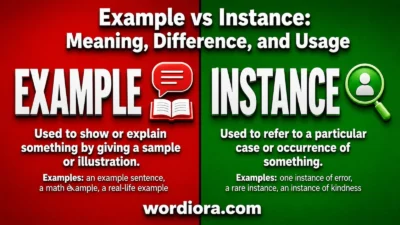
Example vs Instance: Meaning, Difference, and Usage
“Example” and “instance” are both correct words, but they do not always feel the same in a sentence. Use “example” when you mean something…
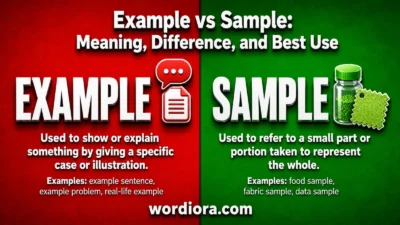
Example vs Sample: Meaning, Difference, and Best Use
Example vs sample is a common word-choice question because both words can point to something smaller that represents something bigger. The…
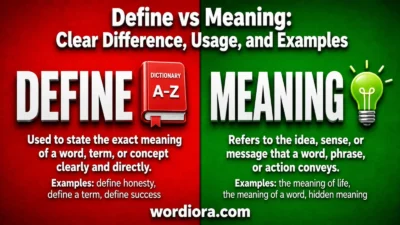
Define vs Meaning: Clear Difference, Usage, and Examples
Both define and meaning are correct English words, but they do different jobs. Use define when you need a verb. It means to explain what…
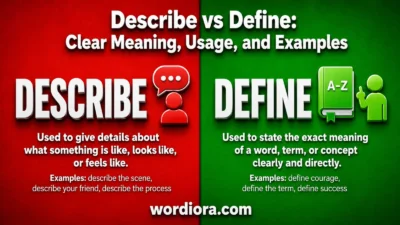
Describe vs Define: Clear Meaning, Usage, and Examples
Describe vs define is a common word-choice question because both verbs help explain something. Still, they do not do the same job. Use…
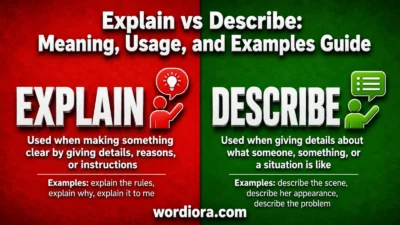
Explain vs Describe: Meaning, Usage, and Examples Guide
Explain vs describe is a common word-choice question because both words involve giving information. The difference is in the goal. Use explain…
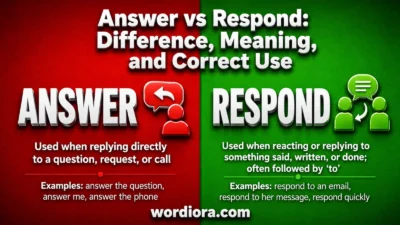
Answer vs Respond: Difference, Meaning, and Correct Use
Last Updated: July 27, 2026 Answer vs respond is a common word-choice question because both words can mean saying something back. The…
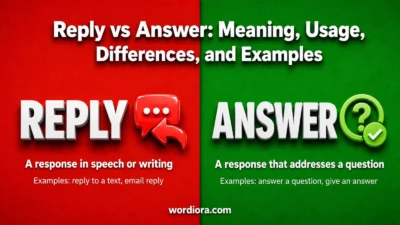
Reply vs Answer: Meaning, Usage, Differences, and Examples
Reply vs answer is a common word-choice problem because both words can mean a response. The difference is not hard, but it depends on the…
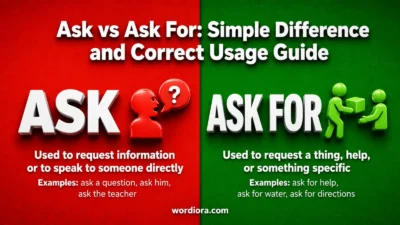
Ask vs Ask For: Simple Difference and Correct Usage Guide
Ask and ask for are both correct, but they are not used the same way. Use ask when you mean to put a question to someone, request an answer,…