
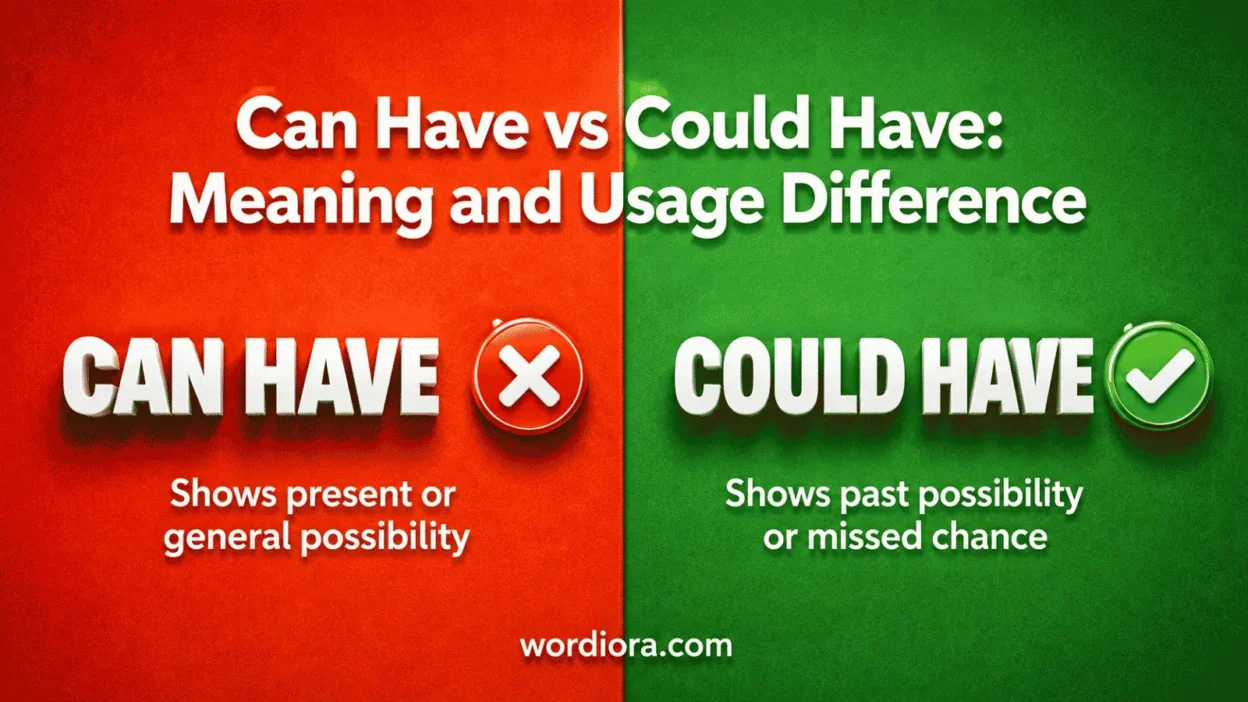
Can have and could have are not interchangeable in most sentences. The main difference is time and certainty.
Use can have when something is possible now, generally possible, or allowed.
Use could have when something was possible in the past, but may not have happened, or when you are making a past guess.
The confusion comes from the fact that can and could are closely related modal verbs. But once have follows them, the meaning changes quickly.
Quick Answer
Use can have for present or general possibility:
- You can have another slice.
- A small mistake can have serious consequences.
- The report can have up to three attachments.
Use could have for past possibility, missed opportunity, or uncertainty about the past:
- You could have called me.
- She could have finished earlier.
- The package could have arrived yesterday.
In everyday American English, could have is much more common when talking about something that may or may not have happened in the past.
Why People Confuse Them
People confuse can have and could have because could often works as the past form of can. That makes it tempting to treat the phrases as simple present-versus-past versions of the same idea.
But they do not always work that neatly.
Can have usually points to something possible, permitted, or capable of being true now or in general.
Could have usually points backward. It often describes a past possibility, a past ability, or a result that did not happen.
Compare these:
- You can have the office tomorrow.
- You could have had the office yesterday.
The first sentence gives present or future permission. The second sentence refers to a missed past opportunity.
Key Differences At A Glance
| Context | Best Choice | Why |
|---|---|---|
| Permission now | can have | It gives someone permission in the present. |
| General possibility | can have | It describes what is possible or allowed. |
| Past possibility | could have | It refers to something that was possible before. |
| Missed opportunity | could have | It suggests something did not happen. |
| Guessing about the past | could have | It expresses uncertainty about what happened. |
| Formal warning about effects | can have | It describes possible consequences. |
Compact comparison:
- Can have = possible now, allowed now, or generally possible.
- Could have = possible in the past, unrealized, or uncertain.
- Can have often sounds practical and direct.
- Could have often sounds reflective, hypothetical, or doubtful.
Meaning and Usage Difference
Can have combines can with have. It usually means “is able to have,” “is allowed to have,” or “may produce.”
Examples:
- You can have the window seat.
- Employees can have flexible schedules.
- Too much stress can have a real effect on sleep.
In the first two examples, can have expresses permission or availability. In the third, it describes a possible result.
Could have combines could with have. It usually comes before a past participle, such as gone, done, seen, made, or finished.
Examples:
- She could have gone with us.
- I could have done that differently.
- They could have made a mistake.
This structure points to the past. It often means the action was possible, but the sentence does not say it definitely happened.
There is an important grammar pattern here:
- could have + past participle
Correct:
- could have helped
- could have seen
- could have been
- could have taken
Incorrect:
- could have help
- could have saw
- could have went
- could have took
Tone, Context, and Formality
Can have sounds direct, neutral, and practical. It works well in everyday speech, workplace instructions, policies, and general explanations.
Examples:
- You can have a copy after the meeting.
- Each account can have two users.
- Poor planning can have expensive results.
Could have sounds more reflective. It can express regret, criticism, uncertainty, or a softer past possibility.
Examples:
- I could have handled that better.
- You could have told me sooner.
- The delay could have been caused by traffic.
The tone depends on context. You could have told me can sound hurt or annoyed. It could have been worse can sound relieved.
Which One Should You Use?
Choose can have when the sentence is about what is possible, available, or allowed now.
Use it when you mean:
- is allowed to have
- is able to have
- may include
- may cause
- may result in
Examples:
- A user can have more than one profile.
- You can have coffee or tea.
- A late payment can have consequences.
Choose could have when the sentence is about the past.
Use it when you mean:
- was able to have or do something
- might have happened
- had the chance but did not act
- may have caused something in the past
Examples:
- He could have joined the call.
- The file could have been deleted by mistake.
- We could have avoided the delay.
If your sentence looks backward, could have is usually the better choice.
When One Choice Sounds Wrong
Can have sounds wrong when the sentence clearly refers to a completed past possibility.
Wrong:
- She can have left early.
Better:
- She could have left early.
Wrong:
- They can have forgotten the deadline.
Better:
- They could have forgotten the deadline.
Could have sounds wrong when you are giving present permission.
Wrong:
- You could have my parking spot today.
Better:
- You can have my parking spot today.
However, could have can work in a polite hypothetical sentence:
- You could have my parking spot if I decide not to drive.
That sentence is conditional, not simple permission.
Common Mistakes (and Quick Fixes)
One common mistake is using can have for a past guess.
Incorrect:
- He can have missed the train.
Correct:
- He could have missed the train.
Another mistake is using the wrong verb form after could have.
Incorrect:
- She could have went home.
Correct:
- She could have gone home.
Another mistake is using could of instead of could have.
Incorrect:
- I could of helped.
Correct:
- I could have helped.
In casual speech, could’ve may sound like could of, but in standard writing, the correct form is could have or could’ve.
Everyday Examples
Here are natural examples of can have:
- You can have the last cookie.
- A small leak can have a big impact over time.
- The app can have multiple users on one account.
- Kids can have different reactions to the same routine.
- A short email can have a friendly tone.
Here are natural examples of could have:
- I could have taken the earlier flight.
- She could have misunderstood the message.
- We could have saved more time with better planning.
- The meeting could have ended sooner.
- That decision could have changed the outcome.
Now compare them directly:
- You can have the book.
- You could have had the book yesterday.
The first sentence gives permission now. The second sentence points to a missed past chance.
Dictionary-Style Word Details
Verb
Both phrases are built with modal verbs.
Can have uses can, which commonly expresses ability, permission, or possibility.
Could have uses could, which commonly expresses past ability, possibility, politeness, or hypothetical meaning. In the phrase could have + past participle, it usually refers to the past.
Noun
Neither can have nor could have functions as a noun phrase in normal use. They are verb phrases.
You would not usually say:
- a can have
- a could have
The one exception is informal discussion about grammar itself, where someone might refer to “a could have sentence.” That is a label, not ordinary noun use.
Synonyms
For can have, possible alternatives include:
- may have
- is allowed to have
- is able to have
- may include
- may cause
For could have, possible alternatives include:
- might have
- may have
- was able to
- had the chance to
- would have been able to
These alternatives are not always exact. Could have can imply a missed chance, while might have often focuses more on uncertainty.
Example Sentences
- You can have more time if you need it.
- A clear subject line can have a strong effect.
- Each room can have a different layout.
- I could have answered sooner.
- They could have taken the wrong exit.
- The problem could have been avoided.
Word History
Can and could are long-established English modal verbs. In modern usage, could often works as a past, polite, or hypothetical form related to can.
The phrase could have became especially important because English uses modal verbs with have + past participle to talk about past possibility, regret, or uncertainty.
Phrases Containing
Common phrases with can have:
- can have access to
- can have an effect on
- can have a chance
- can have more than one
- can have serious consequences
Common phrases with could have:
- could have been
- could have done
- could have gone
- could have made
- could have happened
- could have avoided
- could have helped
Conclusion
The difference between can have and could have is mainly about time and meaning.
Use can have for present permission, present possibility, or general results:
- You can have the seat.
- Stress can have physical effects.
Use could have for past possibility, missed chances, or uncertain past events:
- You could have asked.
- The message could have been lost.
When the sentence looks backward, choose could have. When the sentence is about what is allowed or possible now, choose can have.