Both must and should have to can be correct, but they do not mean the same thing.
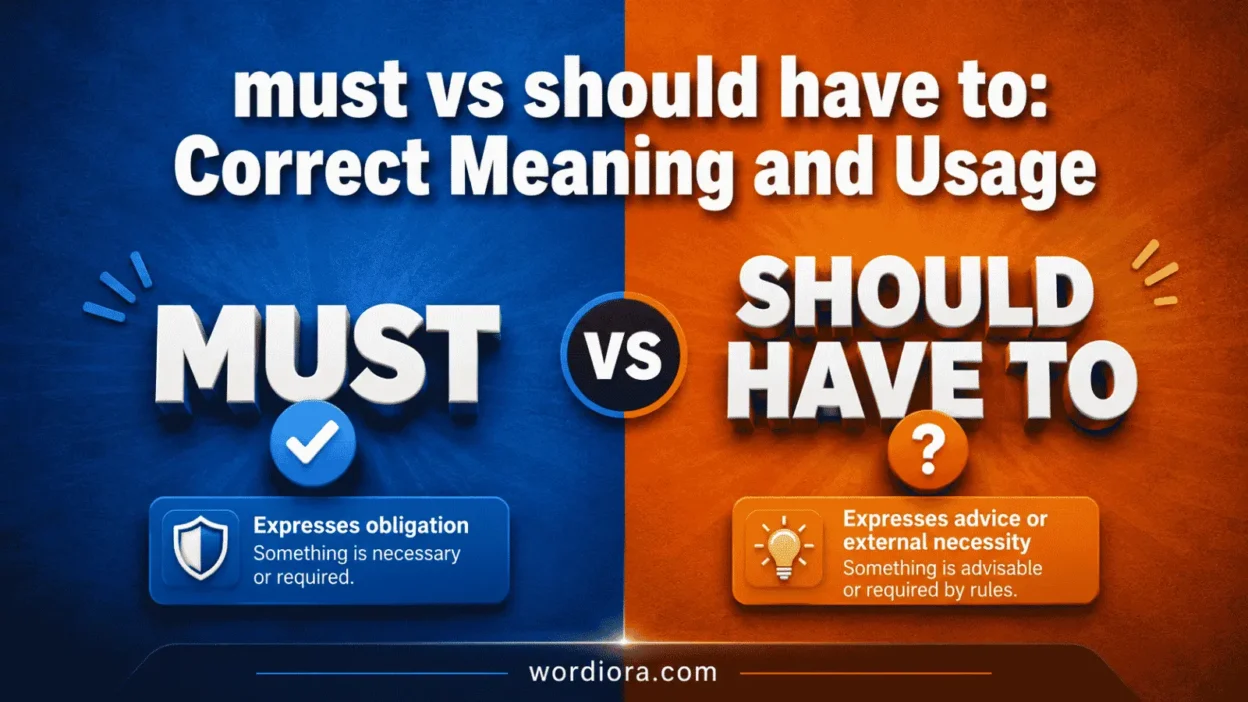
Use must when something is required, necessary, or strongly expected. Use should have to when you mean that someone ought to be required to do something or that a requirement would be fair, proper, or reasonable.
The key difference is simple: must states the requirement directly. Should have to comments on whether the requirement should exist.
Quick Answer
Must is the better choice for a direct rule, duty, need, or strong instruction.
Example:
Employees must clock in before starting work.
Should have to is the better choice when you are judging a rule or expectation.
Example:
Employees should have to clock in before starting work.
The first sentence says the rule exists. The second says the speaker thinks the rule should exist.
Why People Confuse Them
People confuse must and should have to because both deal with obligation.
They can also point to the same action. In both of these sentences, the person is connected to an obligation:
You must show your ID.
You should have to show your ID.
But the message changes. The first sentence gives or states a rule. The second sentence gives an opinion about what the rule should be.
That small change matters in work emails, school rules, signs, policies, and everyday advice.
Key Differences At A Glance
| Context | Best Choice | Why |
|---|---|---|
| A direct rule | must | It clearly states what is required. |
| A legal, safety, or workplace instruction | must | It sounds firm and official. |
| A personal strong need | must | It shows urgency or necessity. |
| An opinion about fairness | should have to | It says a rule would be reasonable. |
| A complaint about an unfair burden | shouldn’t have to | The negative form is very natural. |
| A casual suggestion | Neither, usually | Use should instead. |
Meaning and Usage Difference
Must means that something is required, necessary, or very strongly expected.
Examples:
You must submit the form by Friday.
Drivers must stop at a red light.
I must remember to call Mom.
In these sentences, must creates a strong sense of duty or need.
Should have to means that someone ought to be required to do something. It does not always say the rule already exists.
Examples:
All renters should have to follow the same parking rules.
Candidates should have to disclose conflicts of interest.
No one should have to work through lunch without a break.
In the first two examples, the speaker supports a rule. In the third, the speaker says an expectation is unfair.
A helpful test is this:
Must = “is required to”
Should have to = “ought to be required to”
Tone, Context, and Formality
Must sounds firm. It works well in rules, notices, instructions, policies, and serious advice.
Examples:
Visitors must sign in at the front desk.
You must wear safety glasses in the lab.
In everyday speech, must can sound strong, dramatic, or formal. A friend might say, You have to try this place, more often than You must try this place, unless they want extra emphasis.
Should have to sounds more like an opinion about fairness, rules, or expectations.
Examples:
Students should have to cite their sources.
Parents shouldn’t have to pay surprise fees.
It is common in debates, complaints, workplace discussions, school rules, customer service issues, and policy talk.
Pronunciation does not need much attention here. The main confusion is not sound. It is meaning.
Which One Should You Use?
Use must when you want the sentence to state a real requirement.
Use should have to when you want the sentence to judge whether a requirement is fair or proper.
Compact comparison:
• must: direct, firm, required now
• should have to: opinion about a rule or expected burden
• must not: not allowed
• shouldn’t have to: should not be expected or forced to
Choose must for instructions:
You must include your full name on the application.
Choose should have to for a rule you think should exist:
Applicants should have to include their full name on the application.
Choose shouldn’t have to for an unfair expectation:
Applicants shouldn’t have to enter the same information three times.
When One Choice Sounds Wrong
Must sounds wrong when you only mean a mild suggestion.
Weak: You must try restarting your phone.
Better: You should try restarting your phone.
Should have to sounds wrong when you are giving a direct command.
Awkward: You should have to leave the building during the fire drill.
Better: You must leave the building during the fire drill.
Should have to also sounds odd when the requirement is already clear and you are not debating it.
Awkward: Passengers should have to show a boarding pass at the gate.
Better for a rule: Passengers must show a boarding pass at the gate.
But if you are arguing for that rule, should have to works:
Passengers should have to show a boarding pass before entering the gate area.
Common Mistakes (and Quick Fixes)
Mistake 1: Using should have to for a direct rule.
Wrong: Employees should have to wear badges in secure areas.
Better: Employees must wear badges in secure areas.
Use should have to only if you mean the rule should exist.
Mistake 2: Using must when the sentence is about fairness.
Flat: Customers must not pay hidden fees.
Better: Customers shouldn’t have to pay hidden fees.
The better sentence says the burden is unfair.
Mistake 3: Confusing must not with shouldn’t have to.
You must not pay means payment is forbidden.
You shouldn’t have to pay means payment should not be required.
Mistake 4: Writing must to before a verb.
Wrong: You must to sign in.
Correct: You must sign in.
Mistake 5: Treating should have to as the past form of should.
Should have to is not the same as should have done.
Different meanings:
You should have called. = Calling was the right action, but you did not do it.
You should have to call. = You ought to be required to call.
Everyday Examples
You must be 18 to enter the contest.
This states a rule.
Contestants should have to prove their age.
This says that requiring proof would be fair.
I must finish this report tonight.
This shows a strong need.
Managers should have to explain major schedule changes.
This supports a workplace requirement.
You must not park here.
This means parking is not allowed.
Residents shouldn’t have to pay for repairs they didn’t cause.
This says the charge would be unfair.
Students must turn in the final paper by 11:59 p.m.
This is a deadline rule.
Students should have to use at least three credible sources.
This is an opinion about what the assignment should require.
Dictionary-Style Word Details
Verb
• must: Used as a modal auxiliary verb before a base verb. It does not take to before the next verb.
Example: You must leave now.
• should have to: A verb phrase made with should plus have to plus a base verb. It often means “ought to be required to.”
Example: All drivers should have to pass a vision test.
Noun
• must: Can be used as a noun meaning something required or very important.
Example: Comfortable shoes are a must for this trip.
• should have to: Not commonly used as a noun in standard US English. It works as a verb phrase, not as a noun.
Synonyms
• must: Closest plain alternatives include have to, need to, be required to, and be obligated to. These are close, but not always exact in tone.
• should have to: Closest plain alternatives include should be required to, ought to have to, and should be expected to. These fit best when the sentence is about whether a rule or burden is fair.
Useful opposites depend on the sentence:
• must not can mean may not or is not allowed to.
• shouldn’t have to can mean should not be required to or should not be expected to.
Example Sentences
• must:
Tenants must pay rent by the first of the month.
You must bring a photo ID to the appointment.
I must stop forgetting my charger.
• should have to:
Landlords should have to give clear notice before entering an apartment.
No employee should have to answer work messages at midnight.
Companies should have to explain extra service fees before checkout.
Word History
• must: Has a long history in English as a verb connected with obligation, need, and necessity. It also developed a noun use, as in a must.
• should have to: Does not have a separate word history as one fixed word. It is built from should and have to, so its meaning comes from those parts working together: should adds judgment or expectation, and have to adds requirement.
Phrases Containing
• must:
must-see
must-have
a must
must not
must be
• should have to:
should have to explain
should have to prove
should have to pay
shouldn’t have to wait
shouldn’t have to choose
Conclusion
Must and should have to are both correct, but they fit different jobs.
Use must when the requirement is direct, real, firm, or urgent.
Use should have to when you are saying a requirement would be fair, proper, or expected.
The clearest shortcut is this: must states the rule. Should have to argues for the rule or comments on the burden.