Could vs was able to is a common grammar choice in English because both can talk about ability in the past.
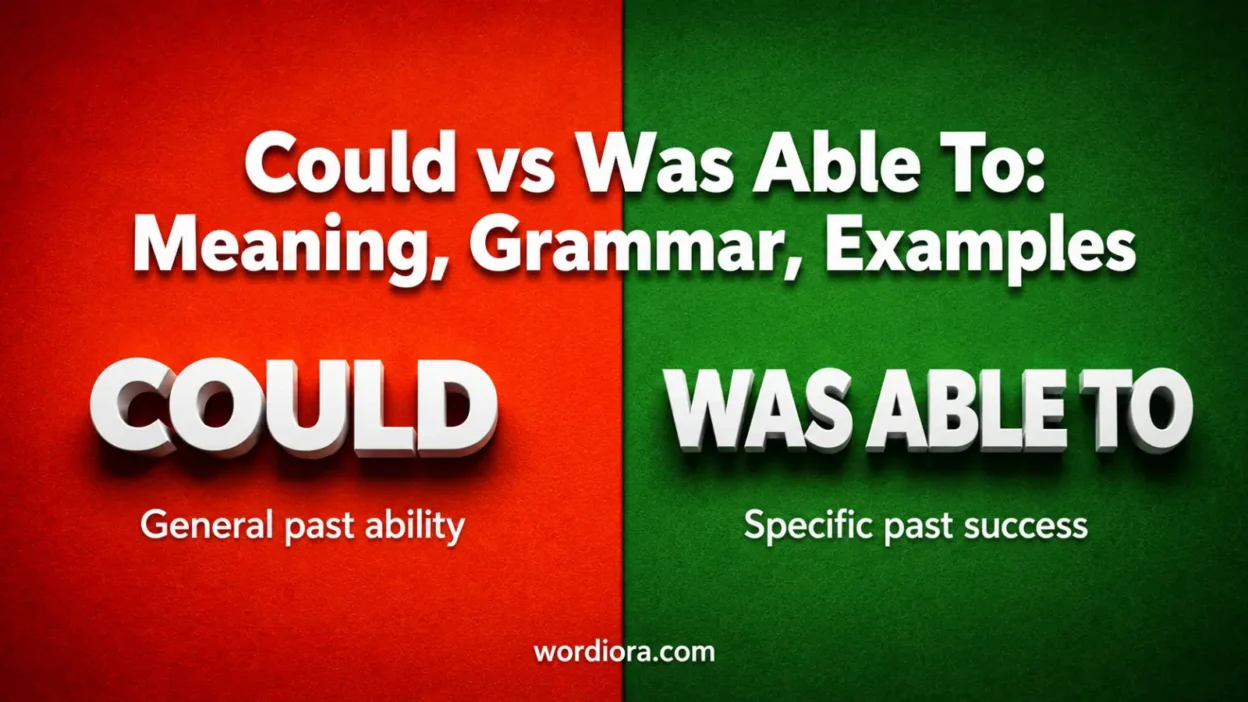
The difference is not just style. Could usually describes a general ability someone had in the past. Was able to often describes success in one specific past situation.
That small difference changes the meaning of many sentences.
Quick Answer
Use could for a general past ability.
Example:
When I was younger, I could run five miles without stopping.
Use was able to when someone successfully did something in one specific past situation.
Example:
After three tries, I was able to unlock the door.
So, both can be correct. The better choice depends on whether you mean a general past ability or a successful past action.
Why People Confuse Them
People confuse could and was able to because both connect to ability.
The sentence “I could swim” and the sentence “I was able to swim” can both describe ability. But they do not always focus on the same thing.
Could often points to what someone had the skill, chance, or capacity to do.
Was able to often points to what someone actually managed to do.
That is why this sentence sounds natural:
I was able to finish the report before noon.
But this one sounds awkward if you mean you actually finished it:
I could finish the report before noon.
The second sentence may sound like you had the option or possibility, not that you completed the report.
Key Differences At A Glance
| Feature | could | was able to |
|---|---|---|
| Main use | General past ability | Specific past success |
| Grammar type | Modal auxiliary verb | Verb phrase with “was” + “able” + infinitive |
| Best with | Skills, habits, general ability | One event, one result, one completed action |
| Common meaning risk | May suggest possibility, not completion | Clearly suggests success |
| Negative form | Couldn’t often works for both general and specific failure | Wasn’t able to also works for specific failure |
The biggest rule is simple: use could for ability in general, and use was able to for one successful past result.
Meaning and Usage Difference
Could is the past form of can when you are talking about ability.
Examples:
When Mia was six, she could read chapter books.
Before his injury, Daniel could lift heavy boxes.
In college, I could stay up late and still make it to class.
These sentences describe general past ability. They do not focus on one completed event.
Was able to means someone had the ability, opportunity, or conditions needed to do something. In past-tense storytelling, it often means the person succeeded.
Examples:
Mia was able to read the whole speech without notes.
Daniel was able to lift the box into the truck.
I was able to submit the form before the deadline.
These sentences focus on a result.
A useful test is this: if you can add “successfully,” was able to is usually the better choice.
I was able to successfully fix the Wi-Fi.
I could successfully fix the Wi-Fi.
The first one sounds natural. The second one does not sound natural in standard US English if you mean the repair actually happened.
Tone, Context, and Formality
Could is shorter and more natural for general past ability.
I could type fast in high school.
She could speak Spanish before she moved to Texas.
Was able to is a little fuller and more deliberate. It can sound slightly more formal when it replaces could for general ability.
She was able to speak Spanish before she moved to Texas.
That sentence is correct, but it sounds heavier than could unless the writer wants to stress ability or effort.
For a specific success, was able to usually sounds clearer.
The team was able to recover the missing files.
The driver was able to stop before hitting the deer.
In these sentences, was able to tells the reader that the action actually happened.
Which One Should You Use?
| Context | Best Choice | Why |
| General past skill | could | It describes ability over time. |
| One successful past action | was able to | It shows the action actually happened. |
| One failed past action | couldn’t or wasn’t able to | Both can show failure. |
| Past sense or awareness | could | It is natural with hear, see, feel, remember, and understand. |
| Formal report of a result | was able to | It sounds clear and result-focused. |
| Casual past ability | could | It is shorter and more natural. |
Use could when the sentence answers “What ability did someone have?”
Use was able to when the sentence answers “Did someone succeed in doing it?”
When One Choice Sounds Wrong
The most common problem happens with a positive sentence about one past event.
Awkward:
I could reach the manager yesterday.
Better:
I was able to reach the manager yesterday.
The first sentence may sound like reaching the manager was possible. The second sentence clearly says you reached the manager.
Awkward:
We could get tickets before they sold out.
Better:
We were able to get tickets before they sold out.
Because the sentence is about a completed result, were able to is clearer.
But negative sentences are different.
Natural:
I couldn’t reach the manager yesterday.
I wasn’t able to reach the manager yesterday.
Both mean the attempt failed.
Also, could is natural with some verbs of perception or understanding, even in a specific past moment.
I could hear sirens outside.
She could see the exit sign.
We could understand the instructions after he explained them.
These sentences describe what someone perceived or understood at that time.
Common Mistakes (and Quick Fixes)
Mistake:
I could pass the test yesterday.
Fix:
I was able to pass the test yesterday.
Why: Passing the test is a specific completed success.
Mistake:
After an hour, we could open the safe.
Fix:
After an hour, we were able to open the safe.
Why: The sentence describes a result after effort.
Mistake:
When I was a kid, I was able to climb trees every day.
Better in casual US English:
When I was a kid, I could climb trees every day.
Why: This is a general past ability, not one event.
Mistake:
I was able to hear music from the apartment next door.
Usually better:
I could hear music from the apartment next door.
Why: With hearing, seeing, and similar verbs, could often sounds more natural.
Everyday Examples
I could ride a bike before kindergarten.
I was able to fix my bike after watching a video.
She could make great coffee when she worked at the café.
She was able to make coffee for the whole team before the meeting.
We could park on the street when we lived downtown.
We were able to find a parking spot near the restaurant.
He could read music as a teenager.
He was able to play the song perfectly at the recital.
I couldn’t open the file on my laptop.
I wasn’t able to open the file on my laptop.
They could understand the movie without subtitles.
They were able to finish the translation before Friday.
Dictionary-Style Word Details
Verb
could: A modal auxiliary verb. It is used with the base form of another verb.
Examples:
could swim
could hear
could finish
could help
was able to: A verb phrase, not a single-word modal. It uses was plus the adjective able plus to and a base verb.
Examples:
was able to swim
was able to hear
was able to finish
was able to help
For plural subjects, use were able to.
Example:
They were able to finish on time.
Noun
could: Not commonly used as a noun in standard US English.
was able to: Not used as a noun. It is a phrase used to express ability or successful action.
The related noun is ability, but that is a different word.
Synonyms
could: Closest plain alternatives depend on meaning. For past ability, use was able to, knew how to, or had the ability to. These are not always exact replacements.
was able to: Closest plain alternatives include managed to, succeeded in, and had the ability to. For a specific successful action, managed to is often close, especially when effort was involved.
Antonyms can include could not, couldn’t, was not able to, and wasn’t able to, depending on the sentence.
Example Sentences
could:
When I was younger, I could sleep through anything.
Before the update, the app could run on older phones.
From the hallway, we could smell fresh bread.
She could remember every line of the song.
was able to:
I was able to reschedule the appointment.
He was able to find the receipt in his email.
The company was able to restore service by midnight.
She was able to finish the race despite the heat.
Word History
could: The word is tied to can and developed as its past-tense form. In modern English, it also has other uses, such as possibility, polite requests, and conditional meaning.
was able to: This phrase is built from was, the past form of be, and able, an adjective meaning having the power, skill, resources, or opportunity to do something. The modern phrase works as a flexible way to express ability.
The history does not create a separate “deep” meaning rule by itself. For modern writers, the useful difference is about grammar and context.
Phrases Containing
could:
could have
could be
could not
couldn’t
could you
could I
could see
could hear
was able to:
was able to finish
was able to find
was able to help
was able to reach
was able to understand
wasn’t able to
were able to
FAQs
Is “could” or “was able to” correct?
Both are correct, but they are used differently. Use could for general ability in the past. Use was able to when someone succeeded in one specific past situation.
Example:
When I was younger, I could run fast.
Yesterday, I was able to run three miles without stopping.
What is the main difference between could and was able to?
Could describes an ability someone had. Was able to often shows that someone actually did something successfully.
Example:
She could speak French as a child.
She was able to speak French with the client yesterday.
Can I say “I could finish the work yesterday”?
Usually, no. If you mean you actually finished the work, say:
I was able to finish the work yesterday.
“I could finish the work yesterday” may sound like it was possible, not that it really happened.
When should I use could?
Use could for general past ability, past skills, or things someone was capable of doing over time.
Examples:
I could swim when I was five.
He could read music in high school.
We could stay up late when we were younger.
When should I use was able to?
Use was able to for one specific past success.
Examples:
I was able to book the last ticket.
She was able to fix the printer.
They were able to finish the project on time.
Can “couldn’t” mean the same as “wasn’t able to”?
Yes, in many negative sentences, couldn’t and wasn’t able to can both describe a failed attempt.
Examples:
I couldn’t open the file.
I wasn’t able to open the file.
Both mean the file did not open.
Is “was able to” more formal than “could”?
Sometimes. Was able to can sound a little more formal or more result-focused. Could is shorter and more natural for casual descriptions of general past ability.
Example:
Casual: I could ride a bike when I was little.
More formal: I was able to ride a bike when I was little.
Can I use could for one specific past event?
Use could carefully with one specific past event. In positive sentences, it often sounds like possibility, not success.
Less clear:
I could reach him yesterday.
Clear:
I was able to reach him yesterday.
But could is natural with verbs like hear, see, feel, remember, and understand.
Example:
I could hear music from the next room.
What is the difference between “managed to” and “was able to”?
Managed to is close to was able to, but it often adds the idea of effort, difficulty, or challenge.
Example:
I was able to find my keys.
I managed to find my keys after searching for an hour.
What is the easiest rule to remember?
Use this simple rule:
Could = general past ability
Was able to = specific past success
Example:
I could cook when I was a teenager.
I was able to cook dinner for everyone last night.
Conclusion
Use could when you mean a general ability in the past.
Use was able to when you mean someone succeeded in one specific past situation.
The main exception is the negative. Couldn’t can describe both general inability and a failed specific attempt.
Best simple rule:
General ability:
I could swim when I was five.
Specific success:
I was able to swim across the lake.
Specific failure:
I couldn’t open the door.
I wasn’t able to open the door.
That is the practical difference between could vs was able to in clear US English.