
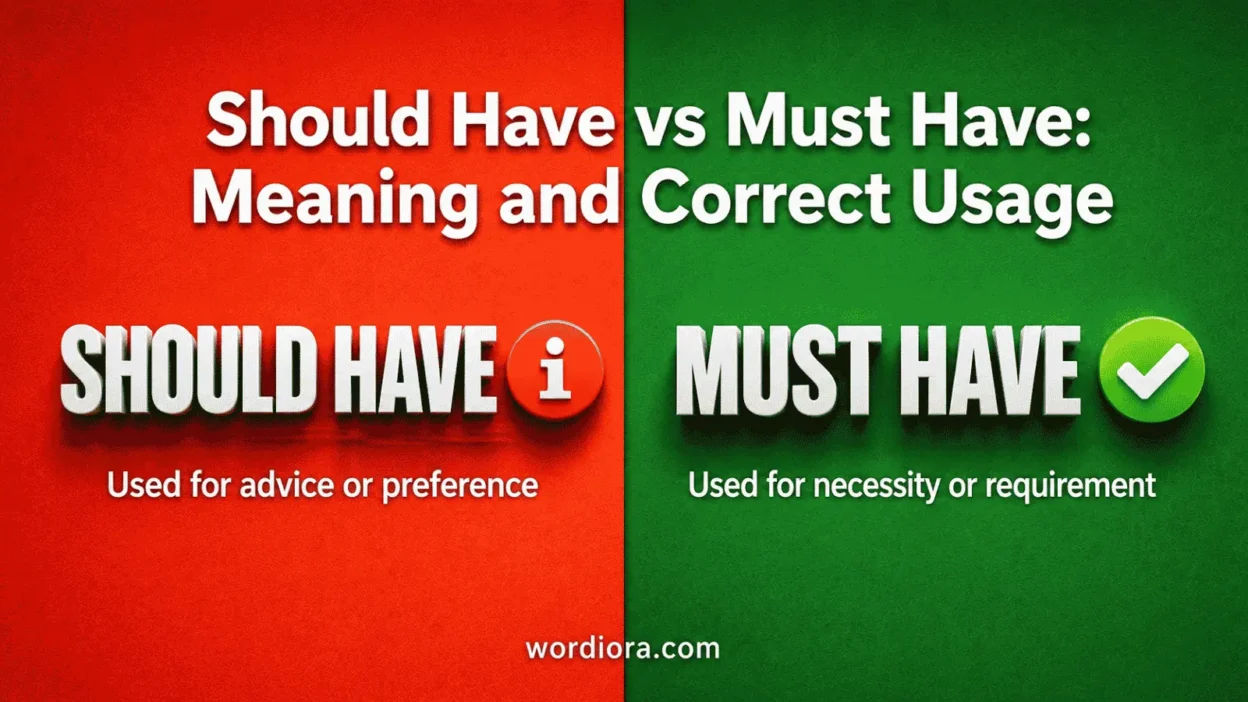
Should have vs must have is a common grammar choice because both phrases talk about the past, but they do not mean the same thing.
Use should have when talking about advice, regret, expectation, or something that was a good idea but may not have happened.
Use must have when making a strong conclusion about the past based on evidence.
The difference is not about form only. It is about meaning.
Quick Answer
Should have means something was advisable, expected, or regretted in the past.
Example:
She should have called before coming over.
Meaning: Calling first was the better choice, but she may not have done it.
Must have means the speaker feels almost certain something happened.
Example:
She must have called while I was driving.
Meaning: I strongly believe she called, probably because I see a missed call.
So, the simplest rule is:
Use should have for past advice or regret.
Use must have for a strong past conclusion.
Why People Confuse Them
People confuse should have and must have because both use the same structure:
modal verb + have + past participle
Examples:
She should have left.
She must have left.
Both sentences look similar, but the meaning changes sharply.
She should have left suggests leaving was the right thing to do.
She must have left suggests the speaker is almost sure she already left.
One judges the past. The other explains the past.
Key Differences At A Glance
| Context | Best Choice | Why |
|---|---|---|
| Giving advice about the past | should have | It says what was a better choice. |
| Expressing regret | should have | It points to something someone wishes had happened. |
| Making a strong guess from evidence | must have | It shows near-certainty about a past event. |
| Saying something was expected | should have | It suggests the expected result did not happen or is uncertain. |
| Explaining why something likely happened | must have | It connects evidence to a conclusion. |
Compact comparison:
- should have = past advice, regret, criticism, or expectation
- must have = strong conclusion about what probably happened
- should have often sounds judgmental or regretful
- must have often sounds logical or deductive
Meaning and Usage Difference
Should have usually looks back at a choice, action, or result and says it was the right, expected, or better thing.
Examples:
You should have saved a copy of the file.
I should have left earlier.
They should have told us about the delay.
In each case, the speaker is looking back and evaluating what happened.
Must have looks back and says something is very likely true.
Examples:
You must have saved a copy somewhere.
I must have left my keys at the office.
They must have known about the delay.
In these examples, the speaker is not giving advice. The speaker is drawing a conclusion.
Tone, Context, and Formality
Should have can sound helpful, disappointed, critical, or regretful, depending on context.
“You should have asked me first” can sound like advice, but it can also sound like criticism.
“I should have checked the address” sounds like personal regret.
Must have usually sounds more analytical. It shows that the speaker is using evidence.
“You must have taken the wrong exit” means the speaker thinks that is the most likely explanation.
Both phrases are normal in spoken and written American English. Neither is overly formal. The key is choosing the one that matches your meaning.
Which One Should You Use?
Use should have when the sentence answers this question:
“What was the better, expected, or correct thing to do?”
Examples:
I should have studied more.
You should have brought a jacket.
The company should have warned customers sooner.
Use must have when the sentence answers this question:
“What probably happened?”
Examples:
I must have missed your text.
You must have left your jacket in the car.
The company must have sent the notice to the wrong address.
If you are judging a past action, use should have.
If you are making a strong guess about a past action, use must have.
When One Choice Sounds Wrong
Sometimes both phrases are grammatically possible, but only one fits the meaning.
Incorrect for regret:
I must have studied harder for the test.
Better:
I should have studied harder for the test.
Why: The speaker is regretting a past choice, not making a conclusion.
Incorrect for deduction:
The roads are wet, so it should have rained overnight.
Better:
The roads are wet, so it must have rained overnight.
Why: The speaker is using evidence to make a strong conclusion.
Incorrect for advice:
You must have called before showing up.
Better:
You should have called before showing up.
Why: The speaker means calling first was the better choice.
Common Mistakes (and Quick Fixes)
A common mistake is using must have when the meaning is regret.
Weak:
I must have listened to your advice.
Clear:
I should have listened to your advice.
Another mistake is using should have when the speaker is clearly making a strong conclusion.
Weak:
He is not answering, so he should have fallen asleep.
Clear:
He is not answering, so he must have fallen asleep.
Writers also confuse should have with should of. The correct phrase is always should have, not should of.
Incorrect:
I should of known better.
Correct:
I should have known better.
Everyday Examples
I should have checked the weather before leaving.
You must have been tired after that long drive.
She should have replied to the invitation sooner.
He must have forgotten about the meeting.
We should have booked the tickets last week.
They must have taken a different route.
I should have brought cash.
You must have seen the sign near the entrance.
The first, third, fifth, and seventh examples look back with advice or regret.
The second, fourth, sixth, and eighth examples make strong conclusions.
Dictionary-Style Word Details
Verb
Should have and must have are verb phrases built with a modal verb, have, and a past participle.
Examples:
should have gone
should have called
must have seen
must have forgotten
Noun
Should have is not normally used as a noun.
Must have can appear as the hyphenated noun must-have, meaning something considered essential.
Example:
A reliable charger is a must-have for travel.
That noun use is different from the verb phrase in must have left, must have known, or must have happened.
Synonyms
For should have, close meanings include:
ought to have
would have been better to
was expected to
needed to, in some contexts
For must have, close meanings include:
probably did
almost certainly did
is very likely to have
seems to have
These are not always exact replacements, but they show the difference in meaning.
Example Sentences
You should have told me the deadline changed.
She must have told someone, because everyone already knows.
I should have taken the earlier train.
The train must have arrived late, because the platform is still crowded.
They should have checked the contract first.
They must have checked the contract, because they caught the error.
Word History
Both phrases come from standard English modal patterns. Should and must are modal verbs, and have + past participle lets the phrase refer to a past action, result, or conclusion.
The important point for modern usage is not origin. It is function: should have evaluates the past, while must have draws a strong conclusion about the past.
Phrases Containing
Common phrases with should have:
should have known
should have gone
should have said
should have done
should have asked
Common phrases with must have:
must have been
must have seen
must have forgotten
must have happened
must have thought
Conclusion
The difference between should have vs must have is clear once you focus on meaning.
Use should have for past advice, regret, criticism, or expectation.
Use must have when you are almost certain something happened because of evidence or logic.
If the sentence judges what someone did, choose should have. If the sentence explains what probably happened, choose must have.