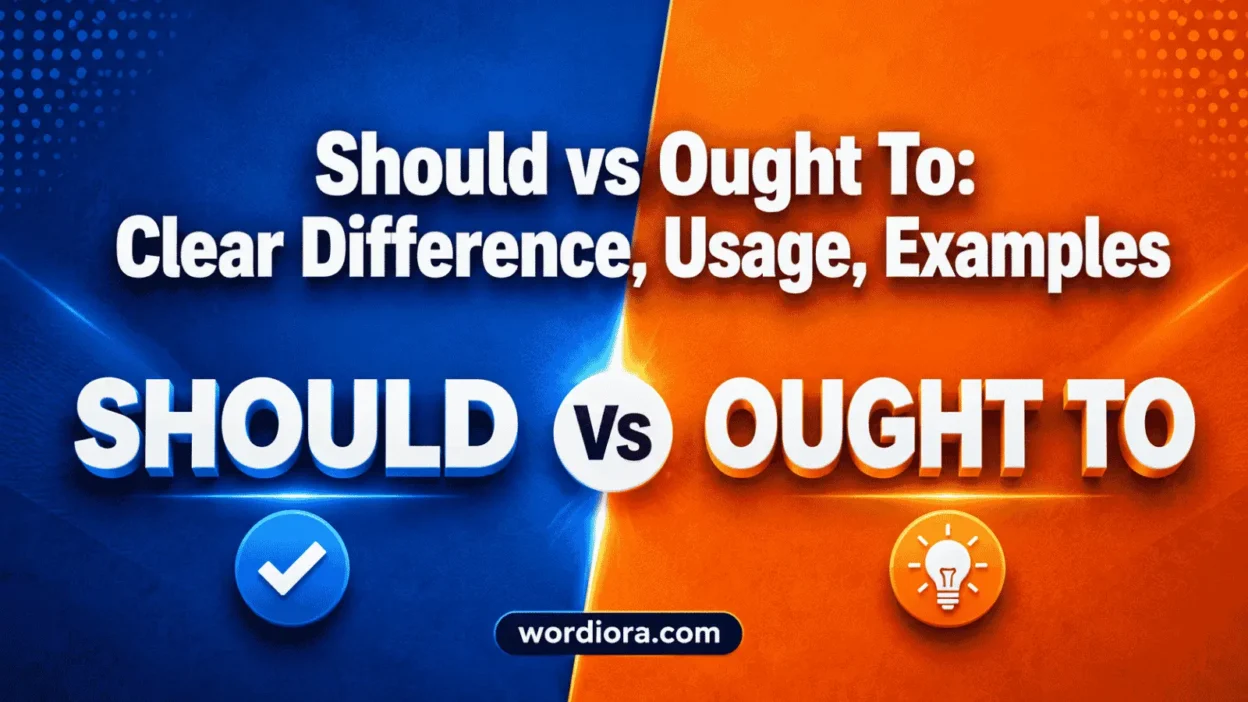
Should and ought to are both correct. In most everyday US English, should is the better choice because it sounds natural, clear, and modern.
Ought to is also correct, but it often sounds more formal, old-fashioned, or moral in tone. You may see it in careful writing, serious advice, or statements about duty.
So the safest answer is simple: use should for normal advice and expectations. Use ought to when you want a slightly stronger or more formal sense of what is right.
Quick Answer
Use should when you mean “this is a good idea,” “this is the right thing to do,” or “this is likely.”
Use ought to when you mean almost the same thing, but with a stronger sense of duty, fairness, responsibility, or moral expectation.
Examples:
You should call your mom before dinner.
You ought to apologize if you hurt her feelings.
Both sentences give advice. The second one sounds more serious because it points to what is right, not just what is helpful.
Why People Confuse Them
People confuse should and ought to because they often appear in the same kinds of sentences.
You can say:
You should get more sleep.
You ought to get more sleep.
Both mean that getting more sleep is a good idea. The grammar is close, and the meaning often overlaps.
The real difference is not usually basic meaning. It is the feel of the sentence. Should is common and flexible. Ought to is less common and can sound more formal, more serious, or more tied to duty.
Key Differences At A Glance
| Context | Best Choice | Why |
|---|---|---|
| Everyday advice | should | It sounds natural in modern US English. |
| Friendly suggestion | should | It feels lighter and more conversational. |
| Moral duty | ought to | It can add a stronger sense of right and wrong. |
| Rules at work or school | should | It sounds clear without sounding stiff. |
| Formal or serious writing | either | Choose based on tone. |
| Questions | should | “Should I…?” is much more natural than “Ought I to…?” |
| Negatives | should not / shouldn’t | “Ought not to” sounds formal in most US contexts. |
| Expected result | should | It is the more common choice. |
Meaning and Usage Difference
Should is a modal verb. It helps another verb show advice, duty, expectation, or probability.
Examples:
You should save your receipt.
The package should arrive today.
We should leave by 7.
Ought to works like a semi-modal phrase. It also helps another verb, but it normally includes to before the main verb.
Examples:
You ought to save your receipt.
The package ought to arrive today.
We ought to leave by 7.
In many sentences, the meaning is close. The main difference is that should is the everyday choice, while ought to can sound more formal or more duty-based.
Compact comparison:
- Should: common, neutral, flexible, good for advice and expectations.
- Ought to: correct, less common, often more serious, good for duty or moral expectation.
Tone, Context, and Formality
Should fits almost everywhere. It works in texts, emails, school papers, workplace notes, instructions, and casual speech.
Examples:
You should update your password.
We should check the budget before Friday.
I should probably head home.
Ought to can sound a little heavier. It may be useful when the sentence is about responsibility, fairness, or what someone clearly owes another person.
Examples:
Companies ought to be honest with customers.
People ought to return things they borrow.
A manager ought to treat every employee fairly.
In US conversation, ought to may sound old-fashioned if you use it too often. It is not wrong. It just has a marked tone.
Which One Should You Use?
Choose should when you want the sentence to sound normal and direct.
Use should for:
Advice: You should drink some water.
Plans: We should meet at noon.
Expectations: The results should be ready soon.
Polite opinions: I think you should apply.
Choose ought to when the sentence is about duty, fairness, or what is morally right.
Use ought to for:
Responsibility: We ought to help if we can.
Fairness: He ought to get credit for the work.
Moral advice: You ought to tell the truth.
If you are not sure, use should. It will sound natural in more situations.
When One Choice Sounds Wrong
Should rarely sounds wrong. It may sound too mild when you mean a strong rule or legal duty, but it is still often grammatical.
Weak:
Drivers should stop at red lights.
Better for a real rule:
Drivers must stop at red lights.
Ought to can sound wrong when the sentence is casual, quick, or modern-sounding.
Stiff:
Should I bring coffee, or ought I to bring tea?
Natural:
Should I bring coffee, or should I bring tea?
In questions, should is usually the natural choice.
Natural:
Should we invite Jake?
Stiff:
Ought we to invite Jake?
Common Mistakes (and Quick Fixes)
Mistake: Using ought without to in a normal affirmative sentence.
Better: You ought to call first.
Mistake: Using to after should.
Wrong: You should to call first.
Right: You should call first.
Mistake: Treating ought to as more correct than should.
Better: Use should for most everyday US writing.
Mistake: Using oughtn’t to in casual US speech.
Stiff: You oughtn’t to ignore that email.
Natural: You shouldn’t ignore that email.
Mistake: Thinking the two always have a strong meaning difference.
Better: In many sentences, they overlap. The difference is often tone.
Everyday Examples
You should wear a jacket. It is cold outside.
You ought to thank your teacher for helping you.
We should book the hotel before prices go up.
The landlord ought to fix the heater.
I should be home by 6.
The meeting ought to be over by then.
You shouldn’t text while driving.
People ought not to spread rumors.
Should I send the report today?
Do you think I ought to say something?
For most of these, should sounds more natural. Ought to works best when the sentence carries a stronger sense of duty.
Dictionary-Style Word Details
Verb
should: Used as a modal verb before the base form of another verb. It does not take to.
Example: You should rest.
ought to: Used as a semi-modal phrase before the base form of another verb. In standard affirmative use, it normally includes to.
Example: You ought to rest.
Noun
should: Not commonly used as a noun in standard US English for this comparison.
ought to: Not used as a noun in standard US English. The phrase works with a following verb.
Synonyms
should: Closest plain alternatives include need to, had better, would be wise to, and be expected to. These are not always exact matches.
ought to: Closest plain alternatives include should, be supposed to, have a duty to, and be expected to. These depend on context.
Helpful opposites:
For advice, the opposite is often should not or shouldn’t.
For duty, the opposite may be ought not to, though it sounds formal.
Example Sentences
should:
You should check your email before the meeting.
The store should be open by now.
We should ask before using the room.
ought to:
You ought to keep your promise.
The city ought to make that crosswalk safer.
They ought to tell customers about the delay.
Word History
should: The word is historically connected with shall. In modern use, it mainly works as a modal verb for advice, duty, expectation, and polite opinion.
ought to: The word ought has older ties to ideas of owing or being under obligation. Modern ought to still often carries that sense of duty or right action.
The history helps explain the tone, but it does not create a strict rule. Modern readers usually notice the difference more as style and formality.
Phrases Containing
should:
should have
should not
shouldn’t
should be able to
should I
should we
ought to:
ought to have
ought not to
oughtn’t to
ought to be able to
do you think I ought to
we ought to
Conclusion
Should and ought to are both correct, but they are not always equal in tone.
Use should for normal US English. It is clear, modern, and natural in most advice, expectation, and opinion sentences.
Use ought to when you want a more formal or serious tone, especially when the sentence is about duty, fairness, or what is morally right.
When in doubt, choose should.