Many writers pause over afterward or afterwards because both words look correct, sound natural, and mean almost the same thing. The difference is not about meaning. It is mostly about regional style and audience expectation.
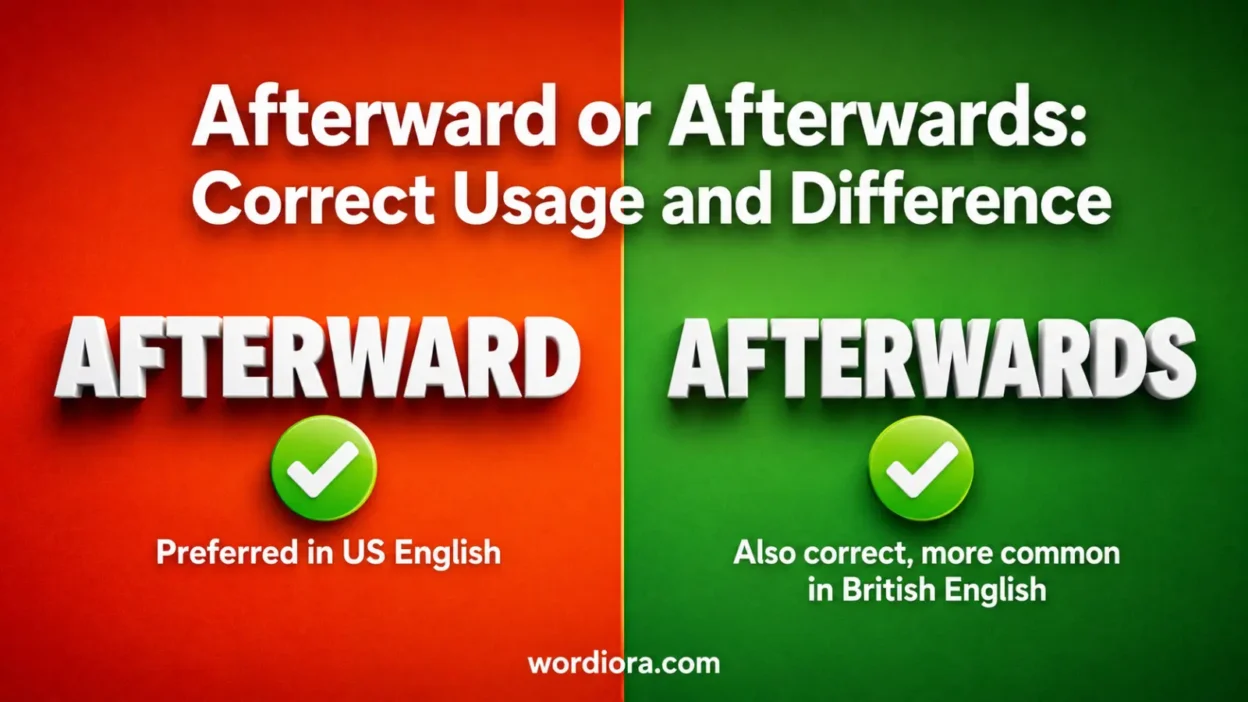
In American English, afterward is usually the better choice. In British English, afterwards is more common. However, both words are standard adverbs, and readers will understand either one in most sentences.
This guide explains the real difference, shows when each word fits best, and helps you avoid common mistakes in school, business, emails, and everyday writing.
Quick Answer
Use afterward for standard American English. Use afterwards if you are writing for a British or more international audience. Both words mean “at a later time” or “after that.” Neither word is wrong, but afterward usually looks cleaner and more natural in US writing.
Examples:
Correct: We had dinner and watched a movie afterward.
Also correct: We had dinner and watched a movie afterwards.
For a US audience, the first sentence is the safer choice.
Why People Confuse Them
People confuse afterward and afterwards because the final s does not change the meaning. The words point to the same idea: something happens later.
Also, both forms appear in books, articles, subtitles, emails, and online posts. Because English has many regional spelling and style differences, writers may see both forms and wonder which one is “official.”
Another reason is the pattern with words like toward and towards. American English often favors the shorter form without s, while British English often accepts or prefers the form with s. That same pattern helps explain why afterward feels more American and afterwards feels more British.
Still, do not treat this as a strict grammar battle. The better question is not “Which one is real?” The better question is “Which one fits my audience?”
Key Differences At A Glance
| Context | Best Choice | Why |
|---|---|---|
| American English | afterward | It is the usual US form. |
| British English | afterwards | It is more common in British usage. |
| Formal US writing | afterward | It looks cleaner and more standard for US readers. |
| Casual conversation | either | Both are easy to understand. |
| School essays in the US | afterward | It matches American style expectations. |
| International writing | either, but stay consistent | The audience may recognize both forms. |
| Same paragraph or article | choose one form | Consistency makes the writing smoother. |
| Before a noun | neither | Use after, as in “after lunch.” |
The most important point is simple: afterward and afterwards share the same meaning, but afterward is the better default for American English.
Meaning and Usage Difference
Afterward means “at a later time” or “after something already mentioned.” It works as an adverb, so it describes when an action happens.
Example: The meeting ended at noon, and we grabbed lunch afterward.
Afterwards means the same thing. It also works as an adverb.
Example: The meeting ended at noon, and we grabbed lunch afterwards.
The meaning does not change. The sentence still says that lunch happened later. The only real difference is style. American readers usually expect afterward, while British readers often expect afterwards.
A small pronunciation note may help. Afterward sounds like “AF-ter-werd.” Afterwards adds a final “z” sound: “AF-ter-werdz.” The sound difference is small, and it rarely causes confusion.
Do not use either word before a noun. That is where many mistakes happen.
Incorrect: We talked afterward dinner.
Correct: We talked after dinner.
In that sentence, after is the right word because it comes before the noun dinner.
Tone, Context, and Formality
In American English, afterward sounds neutral, polished, and natural. It fits almost every setting, from casual texting to business writing.
Examples:
I called her afterward.
Please send the updated file afterward.
He apologized afterward.
Afterwards also sounds natural, but in US writing it can feel slightly more British or international. It is not informal, childish, or wrong. It simply does not match the most common American preference as closely.
Examples:
We went for coffee afterwards.
She felt better afterwards.
They spoke to the manager afterwards.
For school, workplace, academic, and edited US writing, choose afterward. For dialogue, fiction, or British-style content, afterwards may fit perfectly.
The tone difference is small. Do not invent a deep meaning difference where none exists. Both words describe later time. Your choice should come from audience, style, and consistency.
Which One Should You Use?
Use afterward if you write for readers in the United States. It is the safest choice for essays, emails, reports, articles, instructions, and professional messages.
Use afterwards if you write in British English or want a British tone. It also works when you quote someone who naturally uses that form.
Here is a simple decision guide:
| Feature | Afterward | Afterwards |
| Meaning | at a later time | at a later time |
| Part of speech | adverb | adverb |
| US preference | stronger | weaker |
| British preference | less common | stronger |
| Formal writing | safe in the US | acceptable but less US-focused |
| Best default for US readers | yes | no |
If you are unsure, use afterward. It will almost never sound strange to an American reader.
When One Choice Sounds Wrong
Neither word is usually grammatically wrong when it means “later.” However, one choice can sound less natural in a specific context.
In a US business email, afterward often sounds more direct and standard.
Better for US business writing: We can review the numbers afterward.
Less US-focused: We can review the numbers afterwards.
In British-style writing, afterwards may sound more natural.
Natural in British style: We had tea afterwards.
Still understandable: We had tea afterward.
The bigger mistake is using either word where after is needed.
Incorrect: I went home afterward the meeting.
Correct: I went home after the meeting.
Also avoid afterwords when you mean later. Afterwords is not the standard form for this meaning. If you mean the section at the end of a book, the word is afterword, not afterward or afterwards.
Common Mistakes (and Quick Fixes)
Mistake 1: Using afterwards in a US essay without consistency.
Weak: The class ended, and we talked afterwards. Later in the paper, the writer uses afterward.
Better: The class ended, and we talked afterward.
Fix: Pick one form and stay with it.
Mistake 2: Using afterward before a noun.
Incorrect: She called afterward work.
Correct: She called after work.
Fix: Use after before a noun or noun phrase.
Mistake 3: Treating afterwards as wrong.
Incorrect idea: Afterwards is bad English.
Better idea: Afterwards is standard, but it is more common in British English.
Fix: Think of it as a style choice, not an error.
Mistake 4: Confusing afterward with afterword.
Incorrect: I read the afterward at the end of the novel.
Correct: I read the afterword at the end of the novel.
Fix: Use afterword only for a closing section in a book.
Mistake 5: Using both forms in the same article.
Weak: We left afterward. Afterwards, we called a cab.
Better: We left afterward. Afterward, we called a cab.
Fix: One style looks cleaner.
Everyday Examples
Here are natural US-English examples with afterward:
The kids finished practice and got ice cream afterward.
I sent the email and called the client afterward.
She watched the interview and felt inspired afterward.
We cleaned the kitchen afterward.
He made a mistake, but he apologized afterward.
The storm passed, and the streets looked calm afterward.
I was nervous before the test but relieved afterward.
They shook hands afterward and left on good terms.
Here are examples with afterwards:
The guests stayed for dessert afterwards.
She laughed about it afterwards.
We walked home afterwards because the weather was nice.
He looked tired afterwards.
They talked for a few minutes afterwards.
For American writing, the afterward examples feel more standard. However, the afterwards examples still make sense and remain grammatically acceptable.
Now compare these with after:
Correct: We ate after the show.
Correct: We talked afterward.
Correct: We talked after the show.
Incorrect: We talked afterward the show.
This difference matters because after can come before a noun, but afterward and afterwards usually stand alone as adverbs.
Dictionary-Style Word Details
Verb
Afterward: Not commonly used as a verb in standard English. Do not write “to afterward” something.
Afterwards: Not commonly used as a verb in standard English. It also should not act like an action word.
Incorrect: We will afterward the meeting.
Correct: We will meet afterward.
Noun
Afterward: Not commonly used as a noun when it means “later.” If you mean a closing note in a book, use afterword, which is a different word.
Afterwards: Not commonly used as a noun. It should not name a thing, person, place, or section.
Incorrect: The afterwards was helpful.
Correct: The afterword was helpful.
Synonyms
Afterward: Closest plain alternatives include later, after that, then, subsequently, and thereafter.
Afterwards: The same alternatives fit: later, after that, then, subsequently, and thereafter.
Use later or after that for simple writing. Use subsequently or thereafter only when a more formal tone fits.
Clear opposites include before, earlier, and previously, depending on the sentence.
Example Sentences
Afterward: We met the new manager and had lunch afterward.
Afterward: The dog ran through the mud, so we cleaned the floor afterward.
Afterward: She gave a short speech, and everyone clapped afterward.
Afterwards: We watched the game and went out afterwards.
Afterwards: He felt embarrassed afterwards, but no one was upset.
Afterwards: They stayed behind afterwards to ask a few questions.
Word History
Afterward: The word comes from older English parts connected to “after” and direction. Over time, it became a common adverb for later time.
Afterwards: This form developed with the added s, a pattern found in several English adverbs. The added s does not create a new meaning.
The history supports the main point: both forms are old and standard, but modern usage gives them different regional preferences.
Phrases Containing
Afterward: Common phrases include soon afterward, shortly afterward, long afterward, immediately afterward, and not long afterward.
Examples:
She left shortly afterward.
Not long afterward, the lights went out.
Afterwards: Common phrases include soon afterwards, shortly afterwards, long afterwards, immediately afterwards, and not long afterwards.
Examples:
They spoke briefly afterwards.
Soon afterwards, the store closed.
Both sets work the same way. For US writing, choose the afterward versions.
FAQs
Is afterward or afterwards correct?
Both are correct. Afterward is the usual choice in American English, while afterwards is more common in British English. They mean the same thing: “at a later time” or “after that.”
Is afterwards wrong in American English?
No. Afterwards is not wrong in American English. However, afterward usually looks more natural and polished for US readers, especially in school, business, and edited writing.
Do afterward and afterwards mean different things?
No. They do not have different meanings. Both words describe something that happens later. The difference is mainly regional style, not definition.
Which word should I use in a US essay?
Use afterward in a US essay. It matches American English better and keeps your writing clean, consistent, and natural.
Can I use afterward at the beginning of a sentence?
Yes. You can start a sentence with afterward.
Example: Afterward, we discussed the results.
Use a comma after it when it introduces the next action clearly.
Can I use afterwards in formal writing?
Yes, but it depends on your audience. In British formal writing, afterwards is normal. In American formal writing, afterward is usually the better choice.
What is the difference between after and afterward?
After can come before a noun or clause: after lunch, after I called. Afterward usually stands alone as an adverb: We ate lunch and talked afterward.
Conclusion
The choice between afterward or afterwards is easier than it looks. Both words are correct, and both mean “at a later time.” The real difference is regional style.
For American English, choose afterward. It is the cleaner default for essays, emails, articles, reports, and professional writing. For British English, afterwards often sounds more natural.
Most importantly, stay consistent. Do not switch between the two forms in the same piece unless you have a clear reason. Also remember that neither word should come before a noun. Write after dinner, not afterward dinner.
If your audience is in the United States, the safest final answer is simple: use afterward.