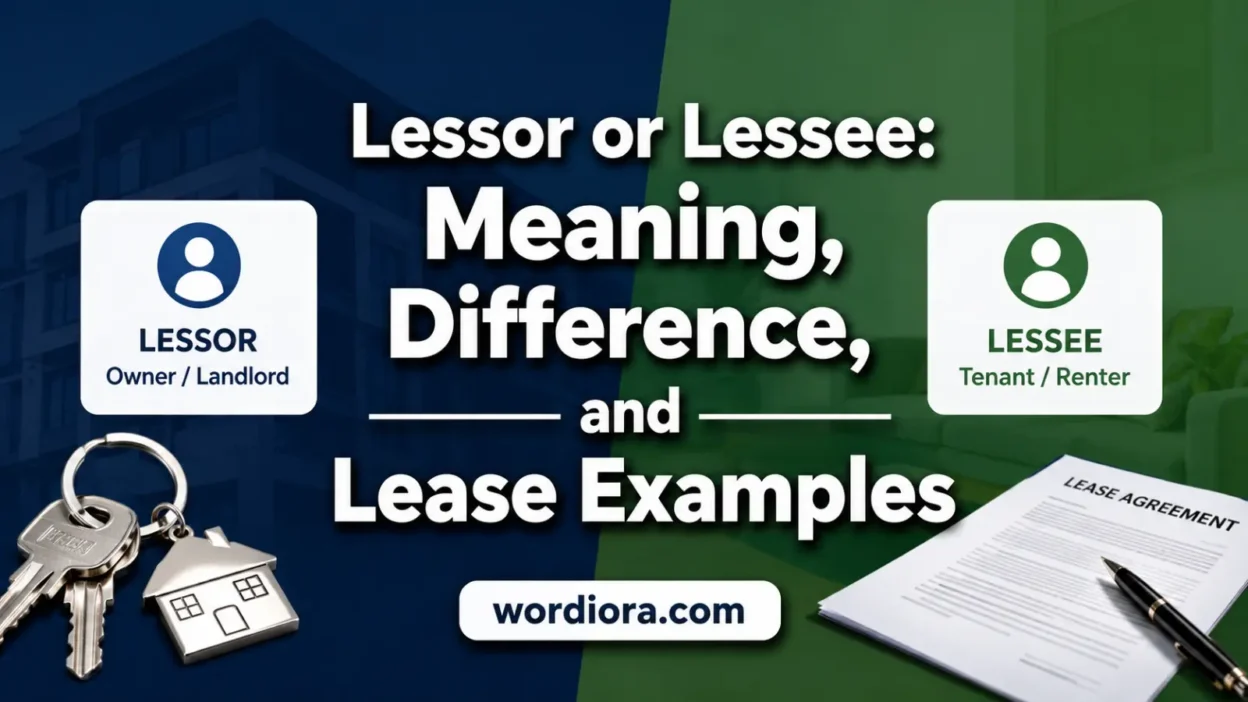
Lessor and lessee are both correct words, but they name opposite sides of a lease. That is why they are easy to mix up. They look similar, sound formal, and usually appear in rental agreements, car leases, equipment contracts, and legal forms.
The simple difference is this: the lessor gives the right to use property, while the lessee receives that right and usually pays for it. In everyday real estate language, the lessor is usually the landlord, and the lessee is usually the tenant. Still, these words are not limited to apartments. They can also apply to cars, office space, machines, storage units, or other leased assets.
Quick Answer
Use lessor for the person or company that owns or provides the property under a lease. Use lessee for the person or company that rents, leases, or uses that property under the lease.
Example: The lessor owns the apartment building. The lessee signs the lease and pays rent each month.
Why People Confuse Them
People confuse lessor and lessee because both words come from lease language. They also share the same first four letters, so a quick reader may not notice the ending.
Another reason is the verb lease. In everyday English, someone can say, “I leased a car,” and mean they got the car to use. A company can also “lease cars to customers,” meaning it provides cars for others to use. Because the same verb can point in either direction, the nouns need extra care.
The endings help. In many formal words, -or often points to the person doing or granting an action, while -ee often points to the person receiving the action. That pattern is useful here: the lessor grants the lease, and the lessee receives the lease rights.
Key Differences At A Glance
| Context | Best Choice | Why |
|---|---|---|
| Property owner leasing out an apartment | Lessor | The owner grants use of the property. |
| Tenant signing an apartment lease | Lessee | The tenant receives the right to live there. |
| Car company leasing a vehicle | Lessor | The company provides the vehicle under contract. |
| Driver paying monthly for a leased car | Lessee | The driver uses the car under the lease. |
| Business renting office equipment | Lessee | The business pays to use the equipment. |
| Equipment owner collecting lease payments | Lessor | The owner keeps ownership and receives payment. |
Compact comparison:
• Lessor: the owner, landlord, company, or provider that grants use under a lease.
• Lessee: the renter, tenant, customer, or user that receives use under a lease.
• Lessor usually receives rent or lease payments.
• Lessee usually pays rent or lease payments.
• Lessor usually keeps ownership.
• Lessee usually gets temporary use, not ownership.
Meaning and Usage Difference
A lessor is the party that leases property or an asset to someone else. The lessor may be a person, business, landlord, dealership, finance company, or equipment owner. The key idea is control or ownership. The lessor has something available and gives another party the right to use it for a set time.
A lessee is the party that leases property or an asset from someone else. The lessee gets the right to use the property during the lease term. In return, the lessee usually pays rent, monthly lease payments, or another agreed amount.
Use lessor when the sentence is about the party providing the property. Use lessee when the sentence is about the party using or renting it.
Correct: The lessor must provide access to the unit on the move-in date.
Correct: The lessee must pay rent by the first of each month.
Tone, Context, and Formality
Both lessor and lessee sound formal. You will see them most often in leases, contracts, legal notices, business documents, accounting discussions, and property forms.
In everyday conversation, landlord and tenant are more common for homes and apartments. For example, most people say, “My landlord fixed the sink,” not “My lessor fixed the sink.” They also say, “The tenant moved out,” not “The lessee moved out.”
However, lessor and lessee are useful when the lease is not about a home. A car dealership can be a lessor. A delivery company can be a lessee of vans. A restaurant can be a lessee of kitchen equipment. These terms work well when you need a precise word for either side of a lease.
Which One Should You Use?
Choose lessor when you mean the side that owns, controls, or provides the asset.
Use it in sentences like these:
The lessor approved the lease renewal.
The lessor still owns the vehicle.
The lessor is responsible for major repairs under the agreement.
Choose lessee when you mean the side that rents, uses, or pays for the asset.
Use it in sentences like these:
The lessee must return the car in good condition.
The lessee pays for utilities under the lease.
The lessee may not sublease the office without written permission.
Here is a simple memory trick: lessor gives; lessee receives. If the person is giving use of the property, write lessor. If the person is receiving use of the property, write lessee.
When One Choice Sounds Wrong
Lessor sounds wrong when the sentence describes the renter or user.
Wrong: The lessor moved into the apartment on Friday.
Correct: The lessee moved into the apartment on Friday.
The person moving into the apartment is not giving the lease. That person is receiving the right to live there.
Lessee sounds wrong when the sentence describes the owner or provider.
Wrong: The lessee collected rent from all tenants.
Correct: The lessor collected rent from all tenants.
The party collecting rent is usually the owner, landlord, or provider, so lessor is the better word.
Be careful with car leases too. The person driving the leased car is usually the lessee. The dealership, bank, or leasing company is usually the lessor.
Common Mistakes (and Quick Fixes)
Mistake 1: Using lessee for the owner
Wrong: The lessee owns the building.
Better: The lessor owns the building.
Mistake 2: Using lessor for the renter
Wrong: The lessor pays monthly rent.
Better: The lessee pays monthly rent.
Mistake 3: Thinking lessor always means landlord
Better: A lessor can be a landlord, but the word can also refer to a car company, equipment owner, or other party leasing an asset.
Mistake 4: Thinking lessee always means apartment tenant
Better: A lessee can be a tenant, but the word can also refer to a person or business leasing a car, machine, office, or other asset.
Mistake 5: Relying only on sound
Better: Look at the role in the sentence. Who grants use? That is the lessor. Who receives use? That is the lessee.
Everyday Examples
The lessor sent a copy of the lease by email.
The lessee signed the lease before moving in.
The lessor agreed to repair the heating system.
The lessee agreed to keep the unit clean.
The lessor owns the truck, but the lessee uses it for deliveries.
The lessee must return the equipment by June 30, 2026.
The lessor may charge a late fee if payment is not received on time.
The lessee asked for written permission to sublease the office.
The lessor manages several rental homes in Austin.
The lessee paid the security deposit before receiving the keys.
The dealership acted as the lessor in the vehicle lease.
The company became the lessee when it rented warehouse space.
Dictionary-Style Word Details
Verb
Lessor: Not commonly used as a verb in standard US English. It is a noun.
Lessee: Not commonly used as a verb in standard US English. It is also a noun.
Use lease as the verb instead.
Correct: The owner leases the apartment to a tenant.
Correct: The tenant leases the apartment from the owner.
Noun
Lessor: A noun meaning the party that grants another party the right to use property or an asset under a lease.
Lessee: A noun meaning the party that receives the right to use property or an asset under a lease.
Both words can refer to individuals or organizations. A lessor may be a person, business, landlord, or leasing company. A lessee may be a tenant, customer, driver, business, or other user under a lease.
Synonyms
Lessor: Closest plain alternatives include landlord, owner, property owner, leasing company, or asset owner. Landlord fits best for real estate.
Lessee: Closest plain alternatives include tenant, renter, leaseholder, or user. Tenant fits best for real estate.
These are not always exact replacements. In a formal car lease, lessee is more precise than tenant. In an apartment conversation, tenant usually sounds more natural than lessee.
The two terms work as opposite roles in a lease, but they are not casual everyday opposites like hot and cold. Their contrast depends on the lease relationship.
Example Sentences
Lessor: The lessor must provide the keys on the lease start date.
Lessor: The lessor kept ownership of the copier during the five-year lease.
Lessor: The lessor may inspect the property after giving proper notice.
Lessee: The lessee must pay rent on time.
Lessee: The lessee is responsible for damage beyond normal wear.
Lessee: The lessee returned the vehicle at the end of the lease.
Word History
Lessor and lessee are formal lease words built around the idea of leasing. The endings help show the roles. Lessor points to the party that grants or provides the lease. Lessee points to the party that receives the lease rights.
You do not need a deep history lesson to use them correctly. The practical rule is enough: lessor gives use; lessee gets use.
Phrases Containing
Lessor: lessor agreement, lessor rights, lessor responsibilities, lessor accounting, property lessor, vehicle lessor.
Lessee: lessee agreement, lessee rights, lessee responsibilities, lessee accounting, commercial lessee, vehicle lessee.
In most clear sentences, these phrases appear near words such as lease, rent, payment, property, equipment, vehicle, landlord, tenant, owner, or user.
FAQs
Is lessor or lessee the landlord?
The lessor is usually the landlord in a residential lease. The landlord owns or controls the property and gives the tenant the right to use it under the lease.
Is the lessee the tenant?
Yes. In a home or apartment lease, the lessee is usually the tenant. The lessee signs the lease, uses the property, and pays rent.
Who pays rent, the lessor or the lessee?
The lessee usually pays rent or lease payments. The lessor usually receives those payments.
Who owns the property, the lessor or the lessee?
The lessor usually owns or controls the property. The lessee usually receives temporary use during the lease term, not ownership.
Can a business be a lessor?
Yes. A business can be a lessor if it owns or controls property, vehicles, machines, or equipment and leases them to another person or company.
Can a business be a lessee?
Yes. A business can be a lessee if it leases office space, vehicles, machines, computers, or other assets from another party.
Conclusion
Lessor and lessee are both correct, but they do not mean the same thing. A lessor is the party that provides property or an asset under a lease. A lessee is the party that receives the right to use it.
For a simple memory cue, use this: lessor gives, lessee gets. In apartment language, the lessor is usually the landlord, and the lessee is usually the tenant. In other lease settings, the lessor may be a dealership, finance company, or equipment owner, while the lessee is the person or business using the asset.