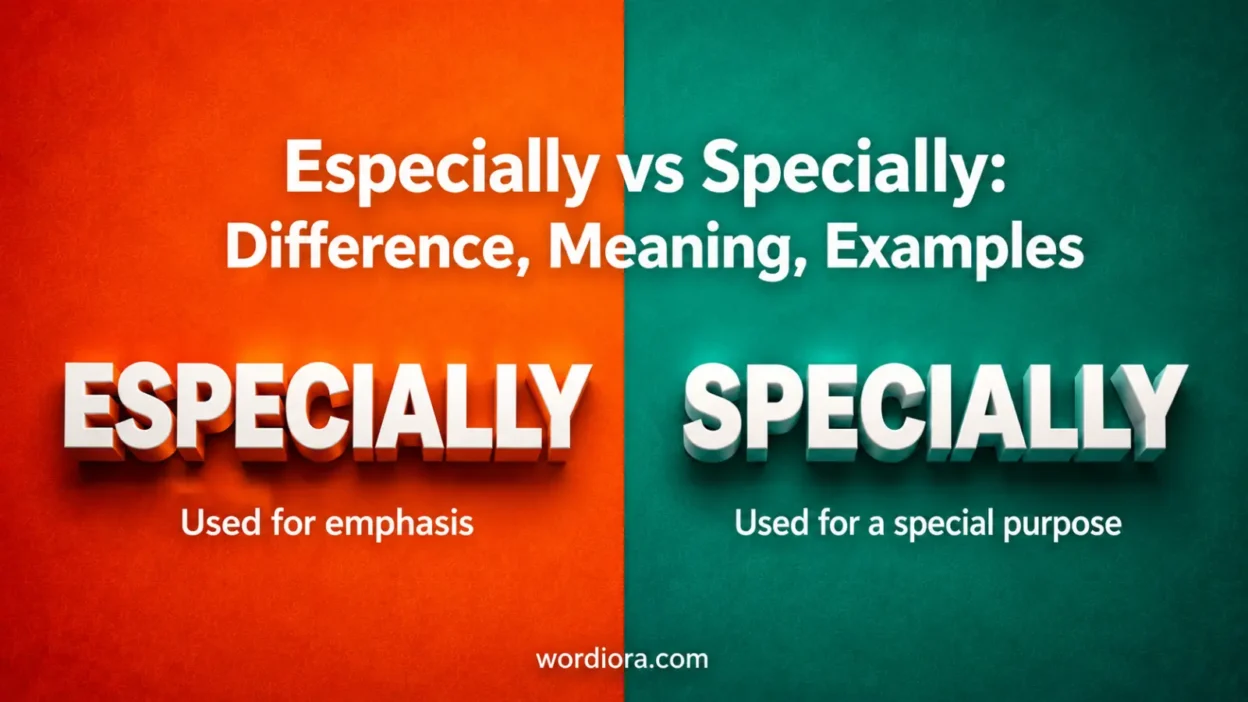
Both especially and specially are correct words, but they are not always the best choice in the same sentence. In everyday US English, especially is usually the safer word when you mean particularly, above all, or more than usual.
Use specially when something is done for a specific purpose, for a special reason, or in a special way.
The main difference is simple: especially highlights importance, while specially often points to purpose or special treatment. There is some overlap, but choosing the clearer word makes your sentence sound more natural.
Quick Answer
Use especially when you want to single out one person, thing, reason, time, or situation.
Correct: I love quiet mornings, especially on weekends.
Correct: This rule is especially important for new drivers.
Correct: The movie was especially funny in the first half.
Use specially when something is made, designed, prepared, trained, chosen, or done for a particular purpose.
Correct: The cake was specially made for her birthday.
Correct: The staff was specially trained for emergencies.
Correct: I do not want to be treated specially.
A helpful guide is this: choose especially for emphasis and specially for purpose.
Why People Confuse Them
People confuse especially and specially because both words are adverbs, both are related to the idea of something “special,” and both can sometimes point to something particular.
They also look and sound similar. In fast speech, the first syllable of especially may not stand out clearly, so learners may hear it as specially.
The confusion grows because some sentences allow both words:
Correct: I bought this especially for you.
Correct: I bought this specially for you.
In those examples, both can mean the item was bought for a particular person. Still, in polished writing, especially is usually better for emphasis, while specially is clearer for a planned purpose or custom use.
Key Differences At A Glance
| Context | Best Choice | Why |
|---|---|---|
| Something stands out from a group | especially | It means particularly or above all. |
| Something is very true, useful, hard, or important | especially | It shows a higher degree. |
| Something is made for a purpose | specially | It points to custom purpose. |
| Someone receives special treatment | specially | It means in a special way. |
| Casual overlap: “for you” or “for the occasion” | either may work | Both can refer to a special purpose. |
Meaning and Usage Difference
Especially means particularly, above all, or more than usual. It helps you point to the strongest example or most important case.
Example: The park is beautiful, especially in October.
This means October is a particularly beautiful time at the park.
Specially means for a special purpose, for a particular reason, or in a special manner.
Example: The jacket was specially designed for cold weather.
This means the jacket was designed with that exact purpose in mind.
Both words are mainly used as adverbs. They modify verbs, adjectives, adverbs, or whole ideas. The pronunciation difference is small, so it usually does not need much attention. The real issue is meaning, not sound.
Extra comparison:
| Feature | especially | specially |
| Main idea | emphasis or importance | purpose or special manner |
| Common meaning | particularly, above all | for a specific purpose |
| Natural with | important, useful, true, hard, when, if | made, designed, built, trained, prepared |
| Best example | especially helpful | specially made |
Tone, Context, and Formality
In modern US writing, especially often sounds more natural when you mean particularly or more than usual.
Natural: I was especially tired after the long flight.
Less natural: I was specially tired after the long flight.
Specially sounds natural when the sentence suggests planning, design, custom work, training, or treatment.
Natural: The room was specially prepared for the interview.
Natural: The team was specially trained for rescue work.
In casual speech, some people use specially where formal writing would prefer especially. That does not always make the sentence impossible, but it can make it sound less polished.
For school, work, articles, and professional writing, choose especially unless you clearly mean a specific purpose or special manner.
Which One Should You Use?
Choose especially when your sentence answers “which one stands out?”
Use it with:
especially important
especially useful
especially true
especially hard
especially when
especially if
especially for beginners
Choose specially when your sentence answers “for what purpose?” or “in what special way?”
Use it with:
specially made
specially designed
specially built
specially trained
specially prepared
treated specially
chosen specially for
Examples:
Correct: This guide is especially useful for students.
Correct: This guide was specially written for students.
The first sentence says the guide is very useful to students. The second says the guide was created for students as its purpose.
When One Choice Sounds Wrong
Some sentences strongly prefer especially.
Correct: I especially like the ending.
Wrong: I specially like the ending.
Correct: The roads are dangerous, especially at night.
Wrong: The roads are dangerous, specially at night.
Correct: She was especially nervous before the interview.
Wrong: She was specially nervous before the interview.
Other sentences strongly prefer specially.
Correct: I do not want to be treated specially.
Awkward: I do not want to be treated especially.
Correct: The shoes were specially made for the runner.
Possible but less direct: The shoes were especially made for the runner.
When the sentence means “in a special way,” specially usually fits better. When the sentence means “particularly” or “very,” especially usually fits better.
Common Mistakes
Mistake: Using specially for general emphasis.
Wrong: This is specially important today.
Correct: This is especially important today.
Mistake: Using especially for special treatment.
Awkward: Please do not treat me especially.
Correct: Please do not treat me specially.
Mistake: Starting a sentence with especially when it sounds incomplete.
Awkward: Especially I like the blue one.
Correct: I especially like the blue one.
Mistake: Thinking specially is always wrong.
Wrong idea: Specially is not a real word.
Correct idea: Specially is correct when it means for a specific purpose or in a special way.
Mistake: Treating the words as fully interchangeable.
Better: Use especially for emphasis and specially for purpose.
Everyday Examples
Correct: I love Mexican food, especially tacos.
Correct: The meeting was especially helpful for new employees.
Correct: This sunscreen is especially important at the beach.
Correct: She gets nervous, especially when she has to speak in public.
Correct: I was especially proud of the final design.
Correct: The dress was specially made for the event.
Correct: The app was specially designed for small businesses.
Correct: The teachers were specially trained to support new readers.
Correct: The room was specially prepared for the guests.
Correct: He does not want to be treated specially because of his title.
Both possible: I saved this especially for you.
Both possible: I saved this specially for you.
The first version feels more emotional or emphatic. The second version focuses more on the special purpose.
Dictionary-Style Word Details
Verb
especially: Not commonly used as a verb in standard US English. It is an adverb.
specially: Not commonly used as a verb in standard US English. It is also an adverb.
Correct: I especially enjoyed the concert.
Correct: The menu was specially prepared.
Noun
especially: Not commonly used as a noun in standard US English.
specially: Not commonly used as a noun in standard US English.
Both words describe how something is true, done, made, chosen, or emphasized. They do not name a person, place, thing, or idea by themselves.
Synonyms
especially: closest plain alternatives include particularly, above all, notably, and more than usual. In some sentences, very or extremely can also work.
Example: This is especially helpful.
Alternative: This is particularly helpful.
specially: closest plain alternatives include specifically, expressly, for a particular purpose, and in a special way.
Example: The chair was specially made.
Alternative: The chair was specifically made.
Clear antonyms are limited. For especially, rough contrasts include generally or not particularly in some contexts. For specially, rough contrasts include routinely, normally, or not specifically, depending on the sentence.
Example Sentences
especially:
I enjoy road trips, especially in the fall.
The instructions are especially clear in the first section.
This policy matters, especially for part-time workers.
She was especially kind to the new student.
specially:
The laptop case was specially made for that model.
The chef prepared a meal specially for the guests.
The volunteers were specially trained for disaster response.
The classroom was specially arranged for the workshop.
Word History
especially: This word is connected to the older adjective especial, which means special or particular. In modern US English, especially is much more common than especial in everyday writing.
specially: This word comes from special plus the adverb ending -ly. Its modern use often keeps the idea of something being done for a special purpose or in a special way.
Both words have been part of English for a long time. For today’s writing, the practical usage difference matters more than memorizing dates.
Phrases Containing
especially:
especially important
especially useful
especially true
especially when
especially if
especially for beginners
not especially
specially:
specially made
specially designed
specially built
specially trained
specially prepared
specially chosen
treated specially
FAQs
Is specially a correct word?
Yes. Specially is a correct word. Use it when something is done for a specific purpose or in a special way.
Correct: The program was specially designed for beginners.
Is especially better than specially?
Especially is better when you mean particularly, above all, or more than usual. Specially is better when you mean for a specific purpose.
Correct: This is especially useful.
Correct: This was specially made.
Can I say “specially for you”?
Yes, you can say specially for you when you mean something was chosen, made, saved, or prepared for that person. Especially for you can also work, and it often sounds warmer or more emphatic.
Correct: I made this specially for you.
Correct: I made this especially for you.
Is it “especially designed” or “specially designed”?
Specially designed is usually the clearer choice because it means designed for a specific purpose.
Correct: The stroller was specially designed for travel.
Is “especially when” correct?
Yes. Especially when is correct and very common.
Correct: I get tired quickly, especially when I skip breakfast.
Is “specially important” correct?
It may appear in informal use, but especially important is the natural choice in standard US English.
Better: This deadline is especially important.
Conclusion
The difference between especially vs specially comes down to emphasis and purpose. Use especially when something stands out, matters more, or is true to a higher degree. Use specially when something is made, designed, trained, prepared, chosen, or done for a particular purpose.
Best quick rule: especially means “particularly,” while specially means “for a special purpose” or “in a special way.”
If you are unsure, ask what your sentence means. If it means “above all” or “more than usual,” choose especially. If it means “custom-made,” “for that reason,” or “with special treatment,” choose specially.