Need to and have to are both correct. They often mean that an action is necessary.
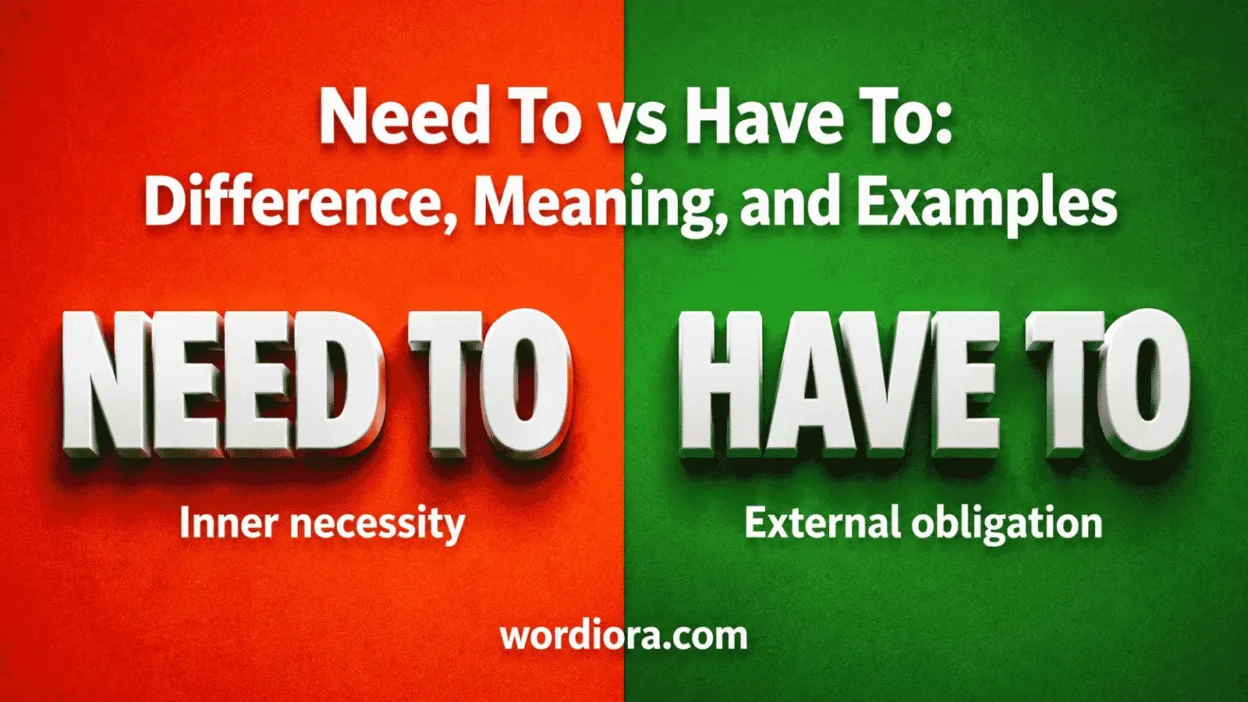
The main difference is tone and source of pressure. Have to usually sounds like a duty, rule, deadline, schedule, or outside requirement. Need to usually sounds like a practical need, personal goal, or necessary step.
In many US conversations, the two can overlap. Still, choosing the better one can make your sentence sound more natural.
Quick Answer
Use have to when something is required, expected, or forced by a rule, situation, job, law, deadline, or other outside pressure.
Use need to when something is necessary for a purpose, result, health, plan, or personal goal.
Examples:
- I have to clock in by 8:00.
- I need to get more sleep.
- We have to show ID at the front desk.
- We need to update the budget before Friday.
The simplest guide is this: have to often answers “What is required?” while need to often answers “What is necessary?”
Why People Confuse Them
People confuse need to and have to because both can point to the same real-world action.
For example:
- I have to finish this report.
- I need to finish this report.
Both sentences can be correct. The first sounds more like an obligation or deadline. The second sounds more like finishing the report is necessary for a goal, plan, or result.
That overlap is why the difference is not a hard grammar wall. It is more about meaning, tone, and what you want the reader or listener to feel.
Key Differences At A Glance
| Context | Best Choice | Why |
|---|---|---|
| Rule or policy | have to | It sounds required by someone or something else. |
| Work deadline | have to | It suggests obligation and little choice. |
| Personal goal | need to | It sounds like a step toward something wanted or needed. |
| Health or safety need | need to | It points to practical necessity. |
| Legal requirement | have to | It sounds official and required. |
| Helpful next step | need to | It sounds less forced and more practical. |
| Strong outside pressure | have to | It carries a stronger sense of duty. |
| Internal decision | need to | It often feels more personal or goal-based. |
Meaning and Usage Difference
Have to means something is required or necessary, often because of outside pressure.
- You have to wear a badge in this building.
- I have to pay rent by the first of the month.
- She has to submit the form before noon.
In these examples, the reason comes from a rule, deadline, system, or expectation.
Need to means something is necessary, often because it helps reach a goal, solve a problem, or meet a real need.
- I need to drink more water.
- We need to fix the login issue.
- He needs to study if he wants to pass.
In these examples, the action is necessary because of a result or purpose.
Both phrases are followed by the base form of a verb:
- need to leave
- have to leave
- needs to call
- has to call
- needed to wait
- had to wait
Tone, Context, and Formality
Both phrases are common in standard US English. Neither is wrong or unusual.
Have to can sound stronger. It often suggests less choice.
- I have to work Saturday.
- Employees have to complete training.
- Drivers have to carry proof of insurance.
Need to can sound more practical, personal, or problem-solving.
- I need to clean out my inbox.
- We need to find a better time.
- You need to back up your files.
In direct advice, need to can sound firm:
- You need to apologize.
- You need to stop texting while driving.
So do not assume need to is always soft. It depends on context and tone.
Pronunciation does not need much attention here. The phrases sound different enough in normal speech: need to sounds like “need tuh,” and have to often sounds like “haf tuh” in everyday American speech.
Which One Should You Use?
Choose have to when the sentence is about a duty, rule, order, deadline, or fixed requirement.
Good uses of have to:
- I have to be at the airport by 6.
- Students have to turn in the form online.
- We have to follow state law.
Choose need to when the sentence is about a necessary action for a goal, result, repair, plan, or personal need.
Good uses of need to:
- I need to save more money.
- We need to talk about the schedule.
- The app needs to load faster.
When both seem possible, ask what you want to stress:
- Stress the rule or pressure? Use have to.
- Stress the purpose or need? Use need to.
When One Choice Sounds Wrong
Sometimes both phrases are possible, but one sounds more natural.
Say:
- You have to be 21 to buy alcohol in the US.
Not usually:
- You need to be 21 to buy alcohol in the US.
The first sounds better because the sentence is about a legal requirement.
Say:
- I need to get my oil changed.
Not usually:
- I have to get my oil changed.
The second is possible, but it may sound like someone is forcing you. The first sounds like the car requires it.
Say:
- We have to evacuate when the alarm goes off.
Not usually:
- We need to evacuate when the alarm goes off.
Both can work, but have to sounds clearer for a rule or emergency instruction.
Common Mistakes (and Quick Fixes)
Mistake 1: Using “have to” when you mean a personal goal
Less natural:
- I have to learn Spanish someday.
Better:
- I need to learn Spanish someday.
Use need to when you mean “this matters for my goal.”
Mistake 2: Using “need to” for a strict rule
Less natural:
- Visitors need to show ID before entering.
Better:
- Visitors have to show ID before entering.
Use have to when a rule or policy requires the action.
Mistake 3: Treating the negative forms as always identical
- You don’t have to come.
- You don’t need to come.
Both can mean it is not necessary to come. But don’t need to can sound more like “there is no practical reason,” while don’t have to can sound more like “it is not required.”
Mistake 4: Forgetting agreement
Incorrect:
- She have to call.
Correct:
- She has to call.
Correct:
- She needs to call.
Everyday Examples
Here are natural US examples:
- I have to renew my license this month.
- I need to renew my license before I forget.
- We have to check out by 11.
- We need to pack before breakfast.
- My son has to bring a signed permission slip.
- My son needs to bring a jacket because it might rain.
- You have to scan your ticket at the gate.
- You need to charge your phone before the trip.
- I had to stay late at work.
- I needed to stay late to finish the presentation.
Compact comparison:
- need to: necessary for a goal, result, plan, health, repair, or practical reason
- have to: required by a rule, duty, schedule, deadline, law, or outside pressure
- need to: often feels more personal or purpose-based
- have to: often feels stronger or less optional
Dictionary-Style Word Details
Verb
- need to: A verb phrase built from need plus to plus a base verb. It means the action is necessary. Example: “I need to leave.”
- have to: A verb phrase built from have plus to plus a base verb. It means the action is required or necessary. Example: “I have to leave.”
Both change for tense and subject:
- I need to go.
- She needs to go.
- I needed to go.
- I have to go.
- She has to go.
- I had to go.
Noun
- need to: Not commonly used as a noun phrase in standard US English. The word need can be a noun, as in “a need for rest,” but need to is normally a verb phrase.
- have to: Not commonly used as a noun in standard US English. It is normally a verb phrase showing requirement or necessity.
Synonyms
- need to: closest plain alternatives include must, should, be necessary to, and be required to, depending on context.
- have to: closest plain alternatives include must, be required to, be obligated to, and be forced to, depending on context.
Useful opposites depend on the sentence:
- don’t need to can mean “it is not necessary.”
- don’t have to can mean “it is not required.”
Do not use must not as the opposite of have to. Must not means something is forbidden.
Example Sentences
- need to: I need to call my doctor.
- have to: I have to show my insurance card at the clinic.
- need to: We need to leave early to avoid traffic.
- have to: We have to be there by 9.
- need to: She needs to update her resume.
- have to: She has to attend the staff meeting.
Word History
- need to: The phrase comes from the ordinary verb need, which expresses lack, necessity, or requirement. A precise first-use claim is not needed for this comparison.
- have to: The phrase comes from have used with to plus a verb to show requirement or obligation. A precise first-use claim is not needed for this comparison.
The useful point for modern readers is not the exact origin date. It is how the phrases work now: need to points strongly to necessity, while have to often points to requirement or obligation.
Phrases Containing
- need to: “need to know,” “need to go,” “need to improve,” “need to fix,” “need to decide”
- have to: “have to go,” “have to work,” “have to pay,” “have to sign,” “have to follow”
These phrases are common because both forms are used before action verbs.
Conclusion
Need to and have to are both correct, and they often overlap. The better choice depends on what you want to stress.
Use have to for rules, duties, deadlines, laws, schedules, and outside pressure.
Use need to for practical necessity, personal goals, plans, health, repairs, and steps needed to reach a result.
When in doubt, use have to for “required” and need to for “necessary.” That simple split will sound natural in most US-English situations.